Ampra
Overview
Role: UX/UI Designer | Duration: 4 weeks
Ampra is an innovative product concept designed to simplify how users stay charged on the go. The product is a compact magnetic sticker that enables wireless power sharing between compatible devices. With a simple tap, users can transfer energy from one device to another, eliminating the need for cables or external chargers. The device contains a magnetic coil or inductive pad that aligns with the charging coil of the host device, allowing for fast, safe, and efficient energy transfer.
The goal of this project was to develop a fully realized product experience, from initial concept and branding to a responsive website, while maintaining a focus on usability, clarity, and a cohesive visual identity.
The primary objective of this project was to design a product and digital experience that communicates convenience, innovation, and reliability. Because Ampra introduces a new way of sharing power between devices, it was important that the design feel intuitive and easy to understand. The website needed to clearly explain how the product works while highlighting its benefits in a way that feels approachable and engaging. Additionally, the design needed to function seamlessly across desktop, tablet, and mobile platforms, ensuring a consistent user experience regardless of device.
Research Process
To ground the project in user needs and real-world context, I conducted research that included the development of user personas, target audience analysis, and competitor analysis. Through this process, I identified key users such as students, travelers, and professionals who rely heavily on their devices throughout the day and need accessible charging solutions.
Analyzing competitors, such as portable chargers and wireless charging pads, revealed that while existing solutions are functional, they often lack convenience and portability. This insight helped define an opportunity for a product that is more compact, intuitive, and seamlessly integrated into everyday use. The research phase informed both the product concept and the overall design direction, ensuring that decisions were rooted in user needs.
User Persona
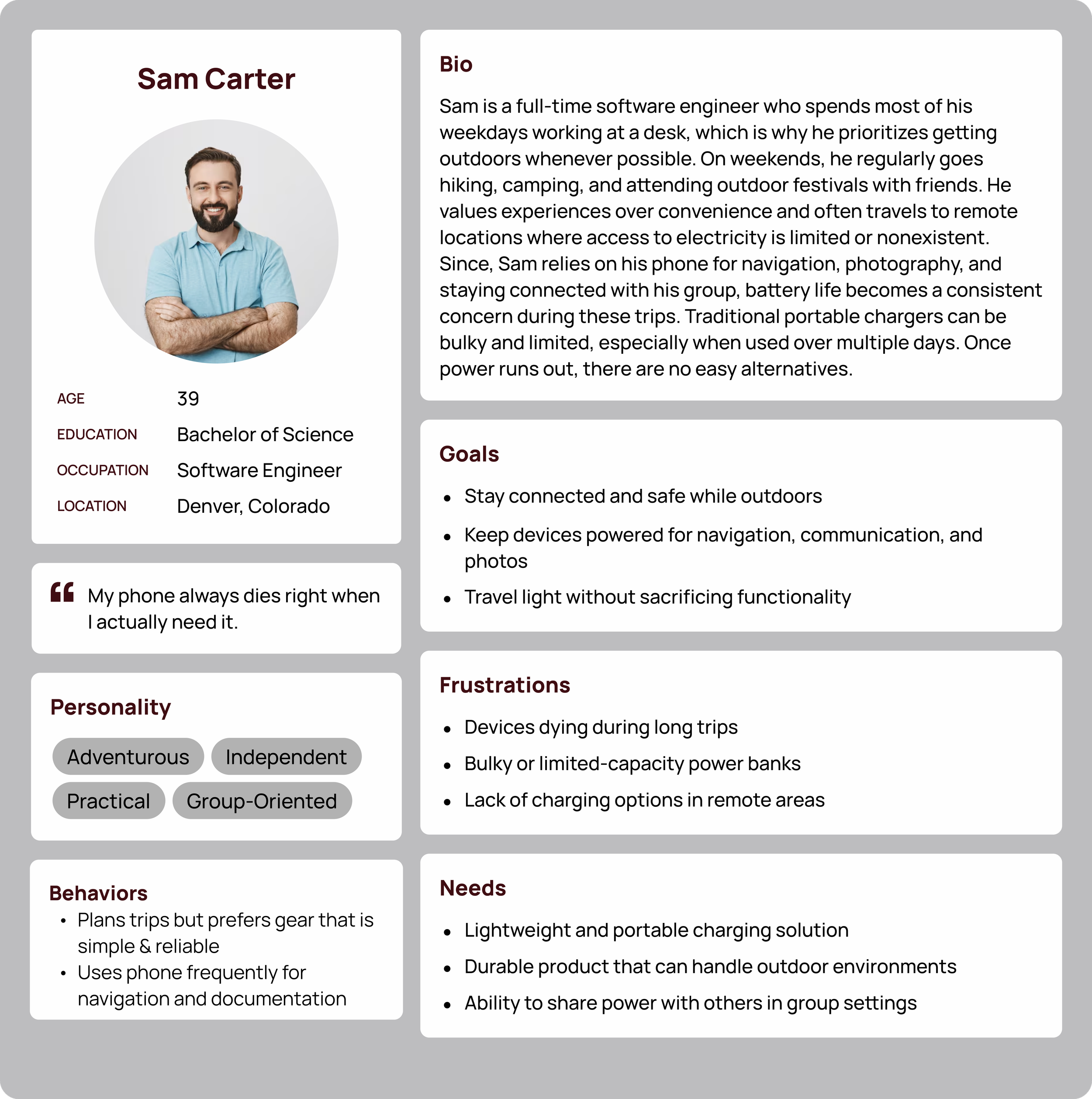
To better understand the needs, behaviors, and motivations of potential users, I developed two key personas that represent distinct use cases for Ampra. These personas helped guide design decisions throughout the branding and UX/UI process, ensuring that the product and website addressed real-world scenarios and user expectations.
Sam represents users in off-grid, shared environments where access to power is limited or unavailable. This persona highlights the importance of portability, durability, and the ability to share energy between devices. Sam’s needs emphasize that Ampra is not just a personal charging tool, but a collaborative solution that enhances group experiences and provides reliability in situations where traditional charging methods fail.
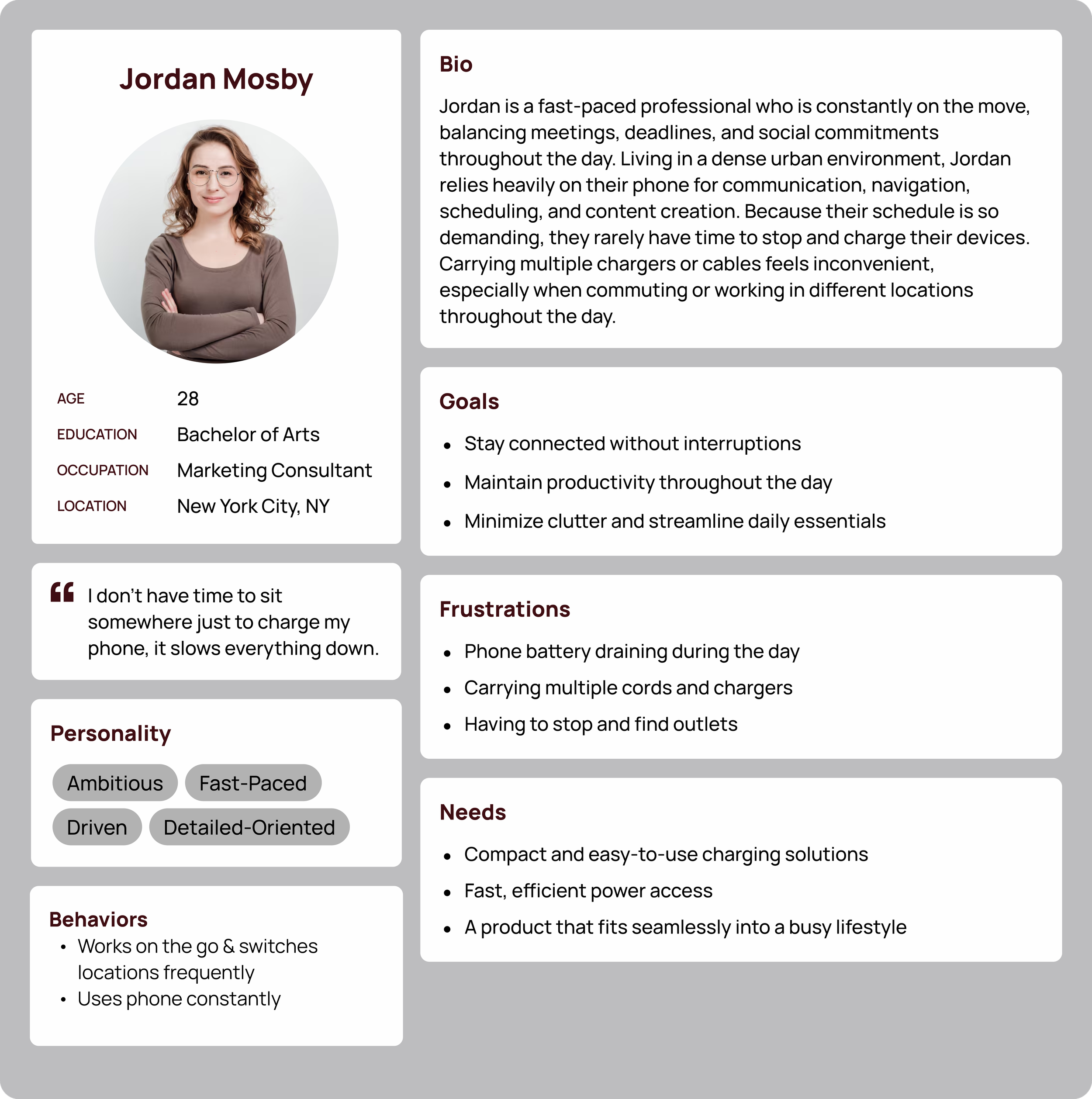
Jordan represents users in fast-paced, high-demand environments where time and convenience are critical. This persona reflects the need for efficiency, seamless integration, and minimal disruption to daily routines. Jordan’s experience highlights how Ampra can function as an everyday convenience tool, allowing users to stay connected without relying on outlets or carrying extra accessories.
Information Architecture
Before designing the interface, I developed an information architecture to organize the website’s content in a clear and logical way. The goal was to ensure users could easily understand what Ampra is, how it works, why it is useful, and where they can purchase it. Establishing this structure early in the process helped guide layout decisions and maintain clarity throughout the design.
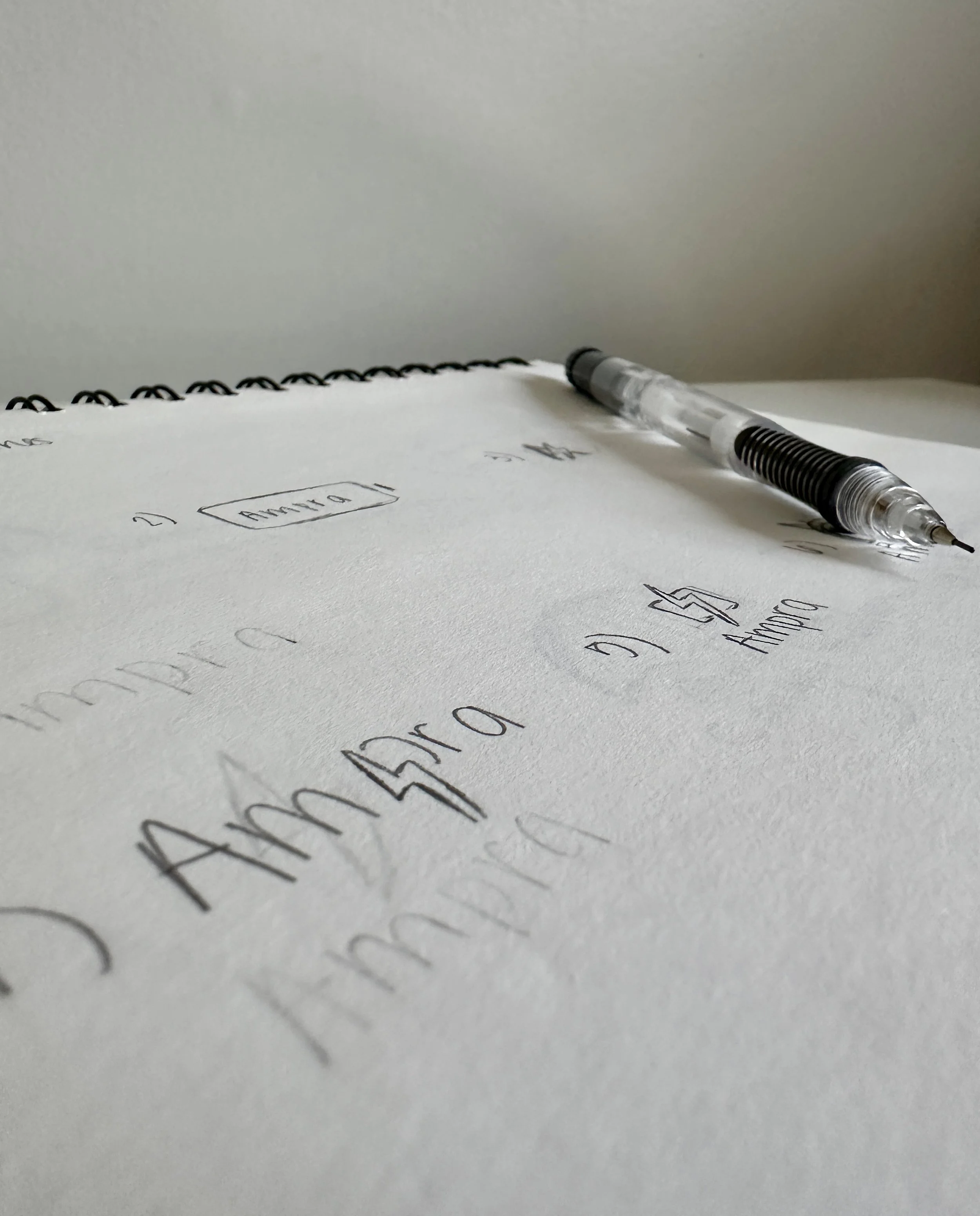
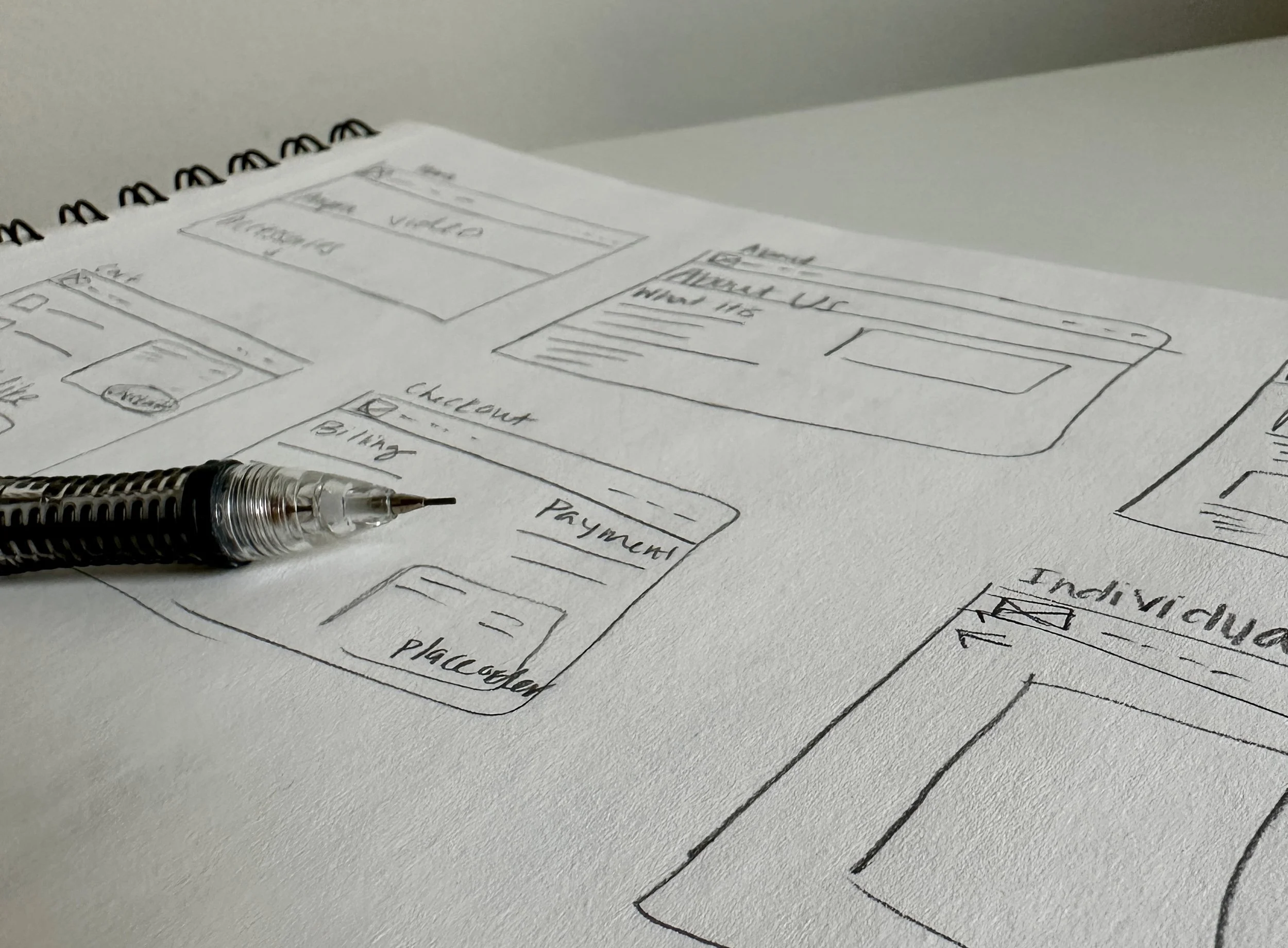
Ideation & Sketches
I then created wireframe sketches for the desktop version of the website, focusing on layout, hierarchy, and user flow. These wireframes allowed me to test different ways of presenting information while prioritizing readability and ease of navigation. Once the desktop structure was established, I adapted the layouts for tablet and mobile formats, ensuring that the design remained responsive and user-friendly across different screen sizes.
Digital Design & Iteration
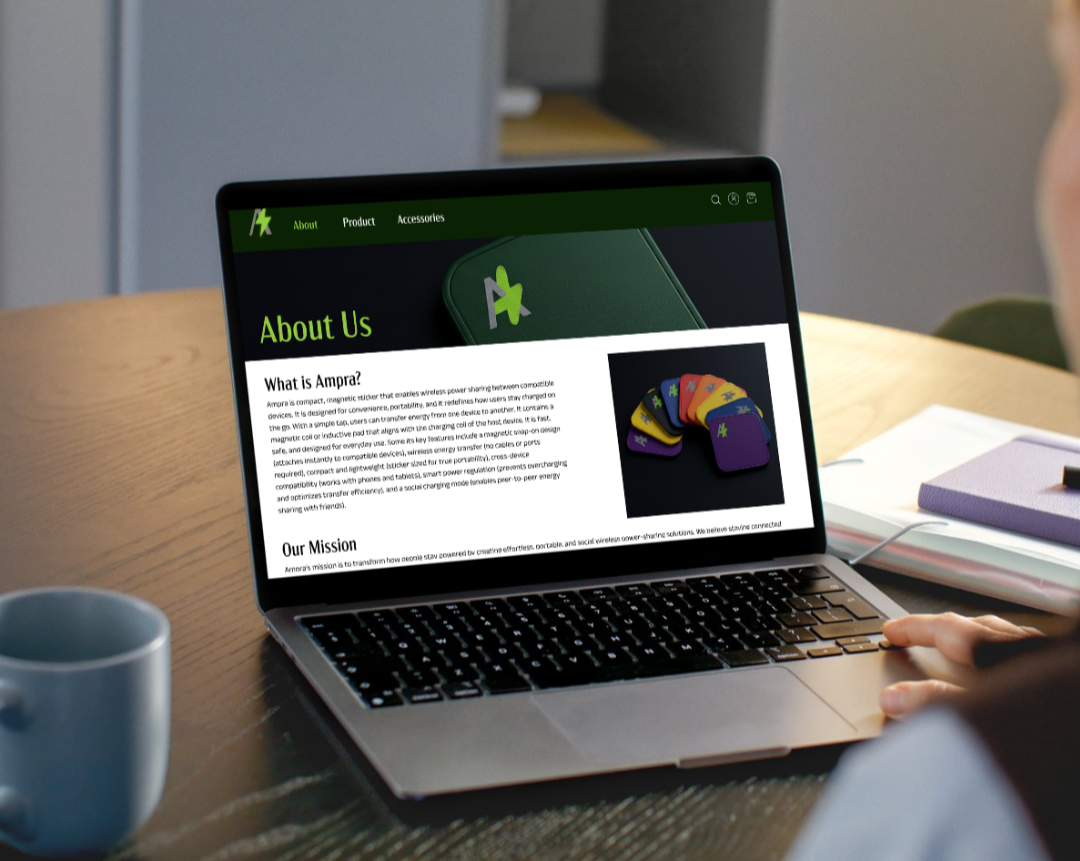
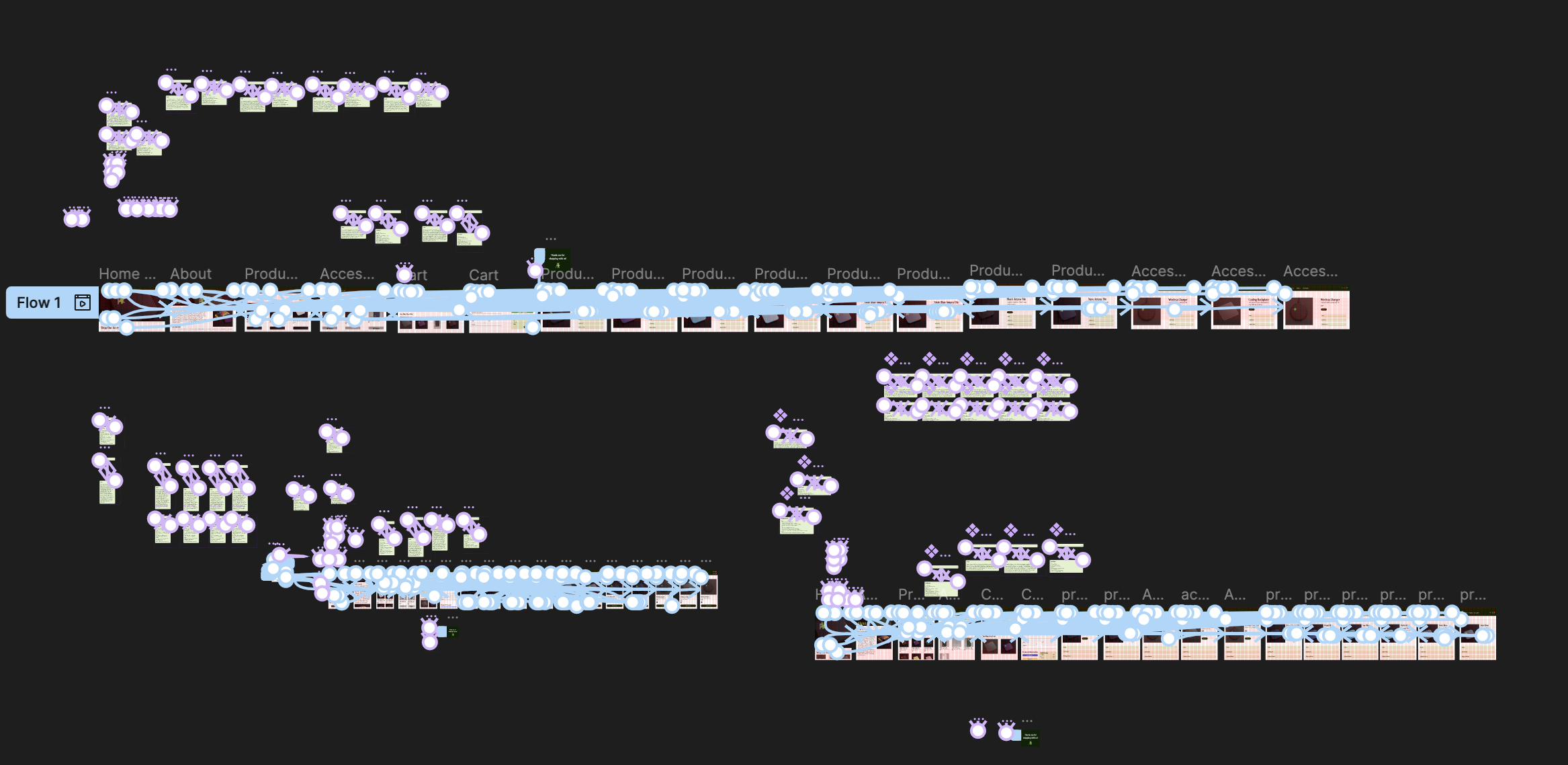
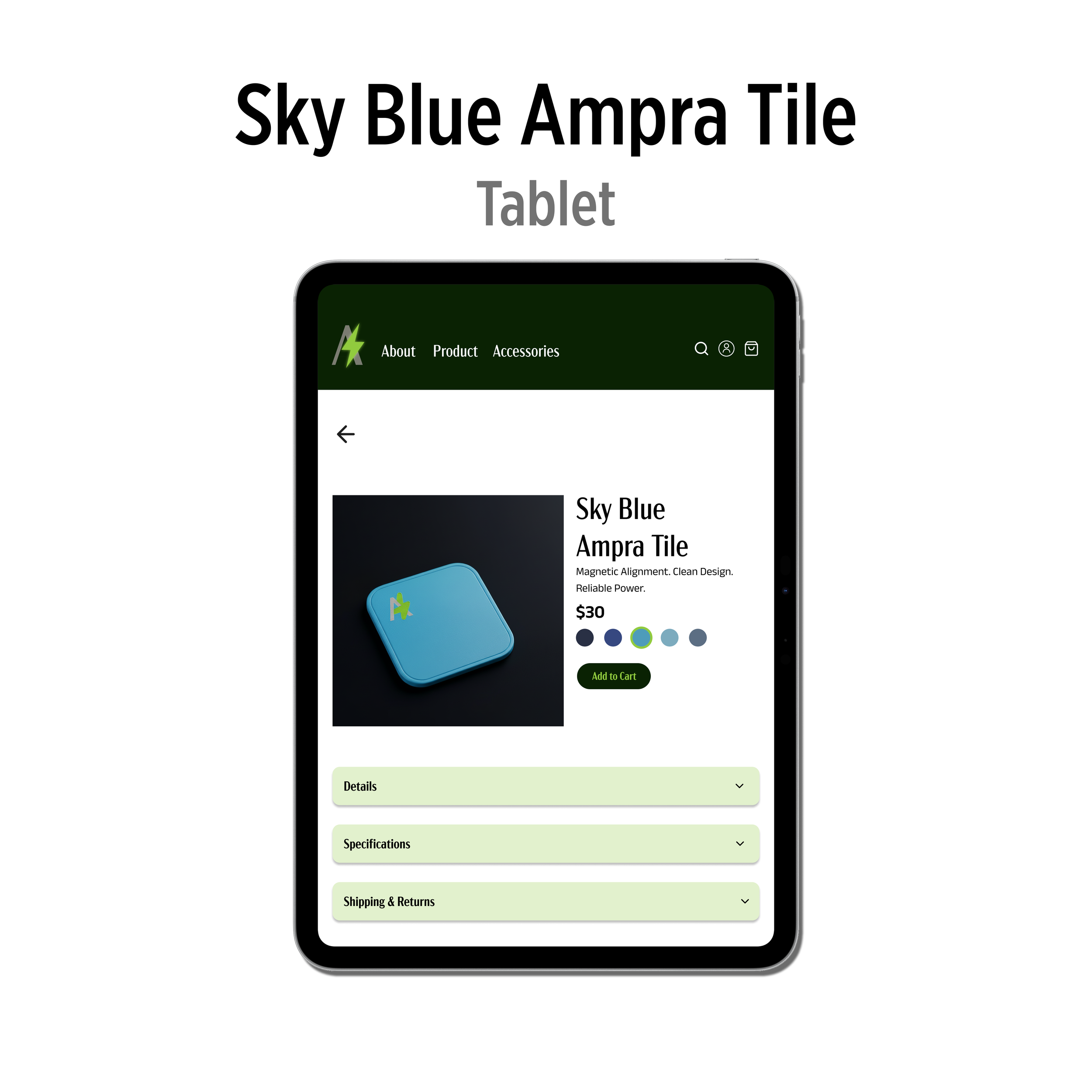
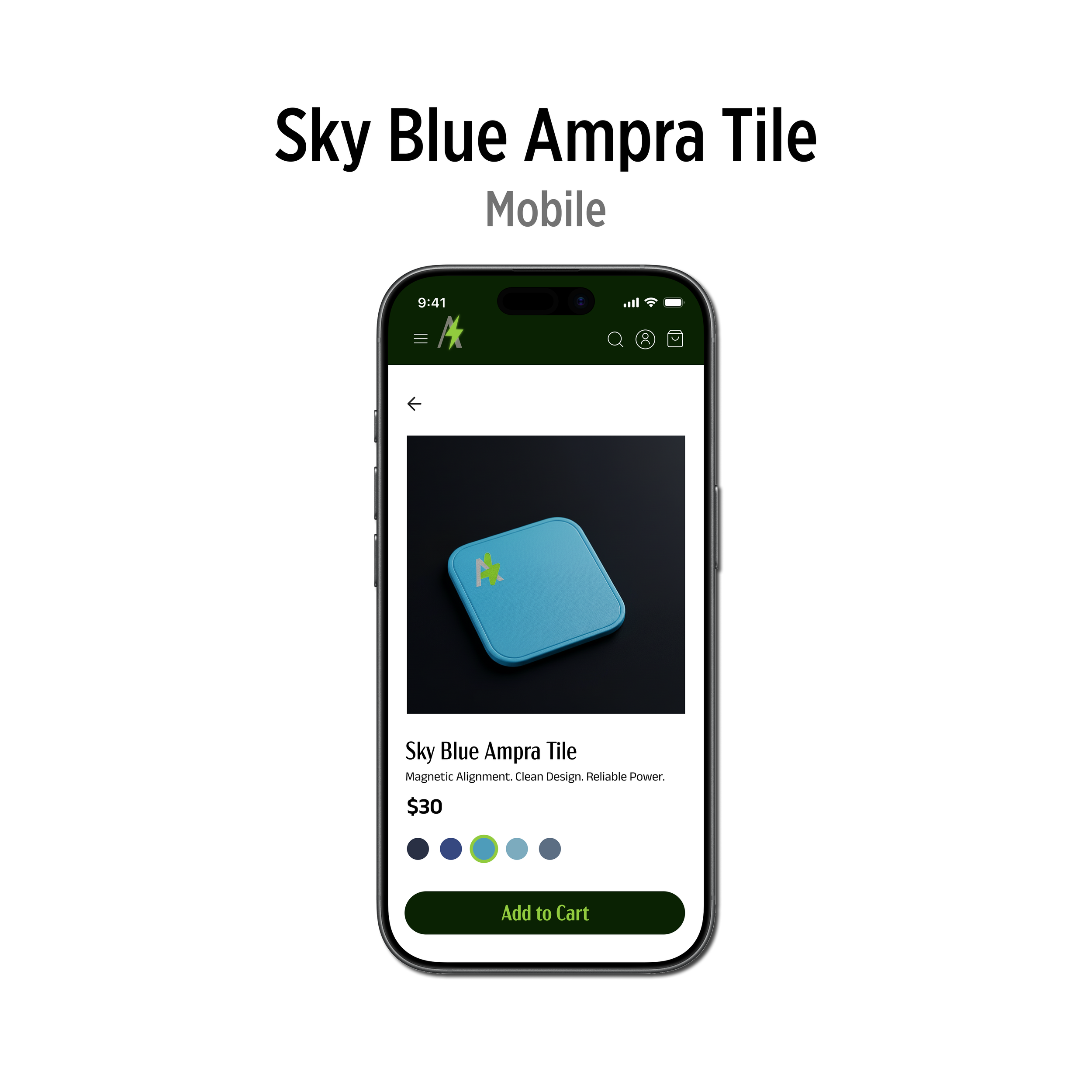
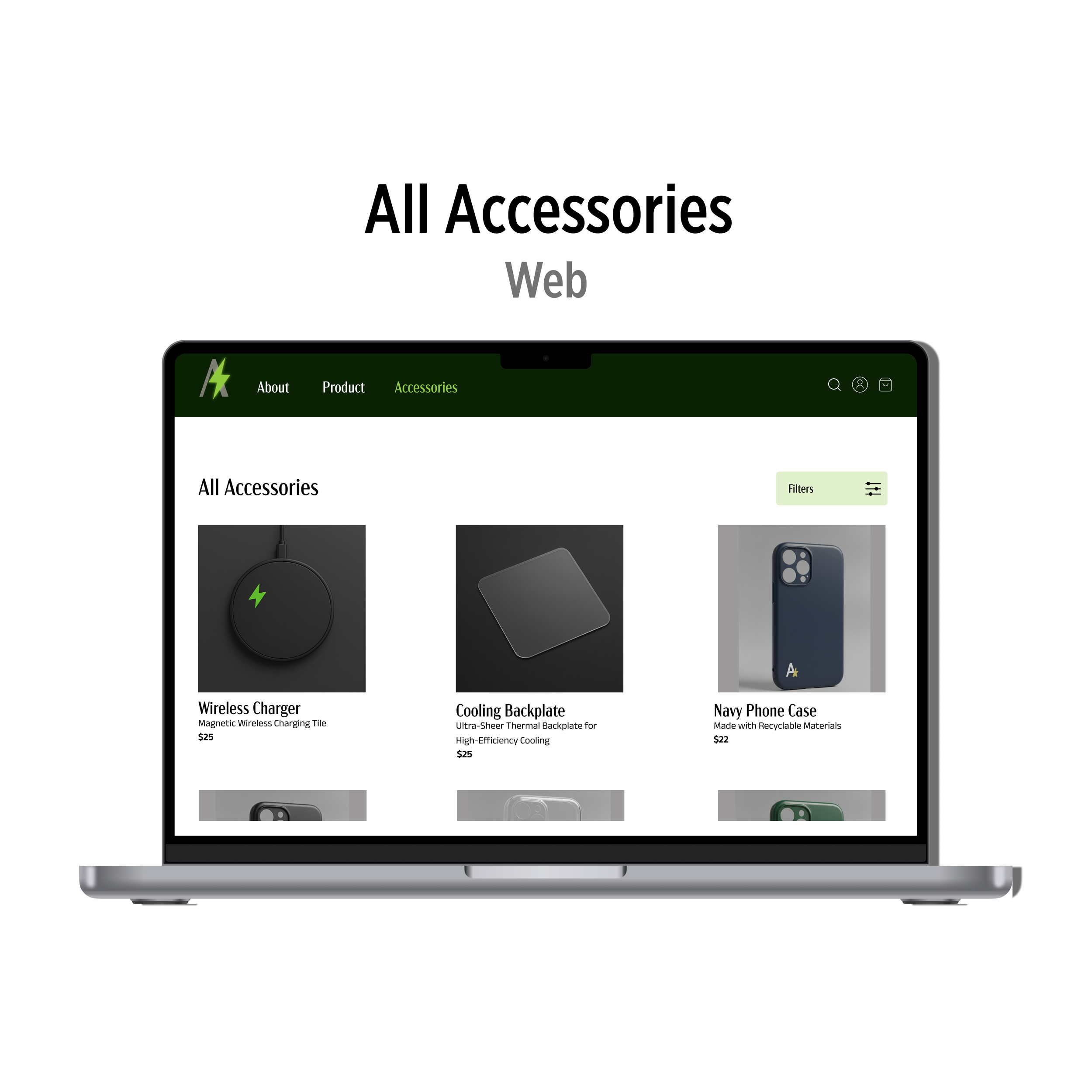
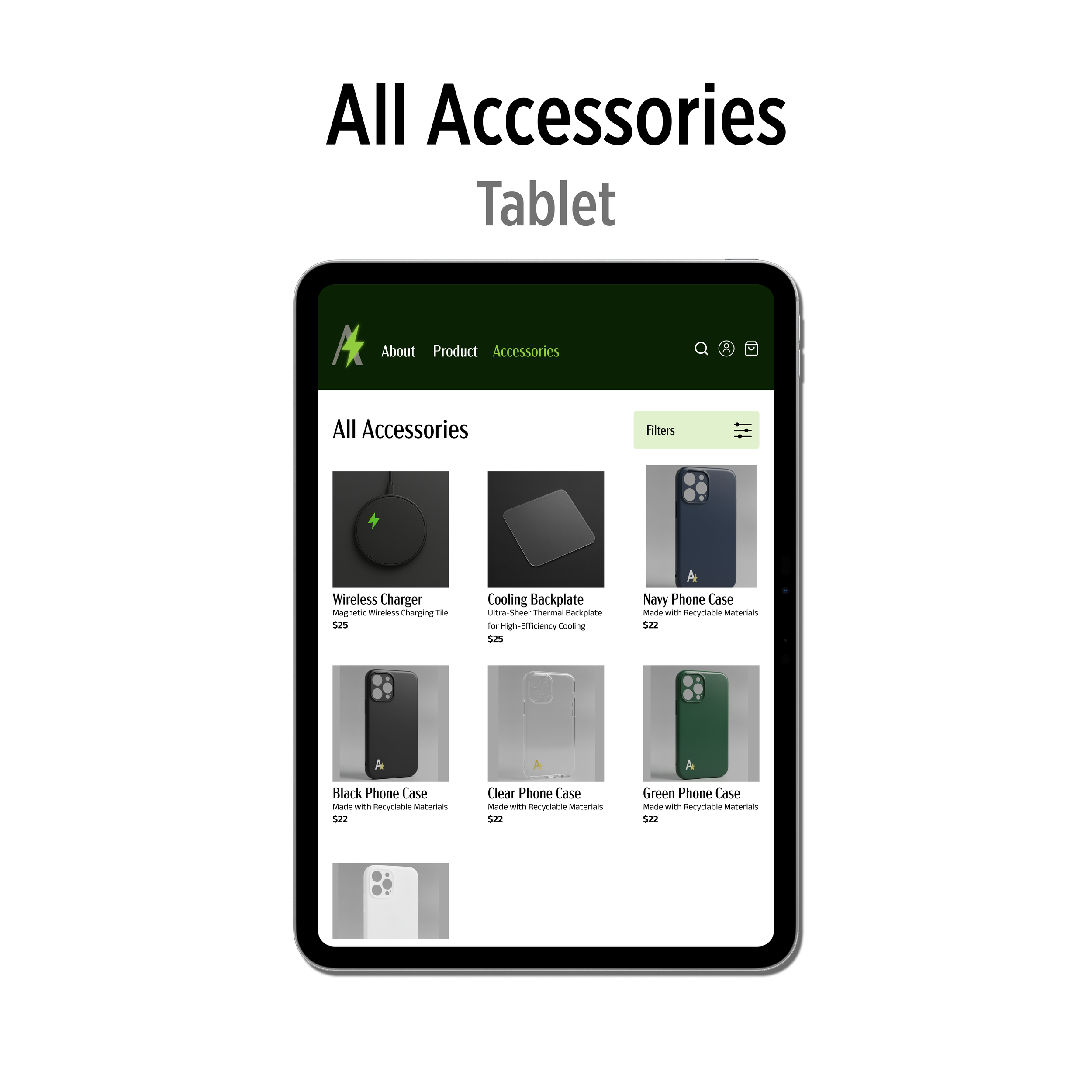
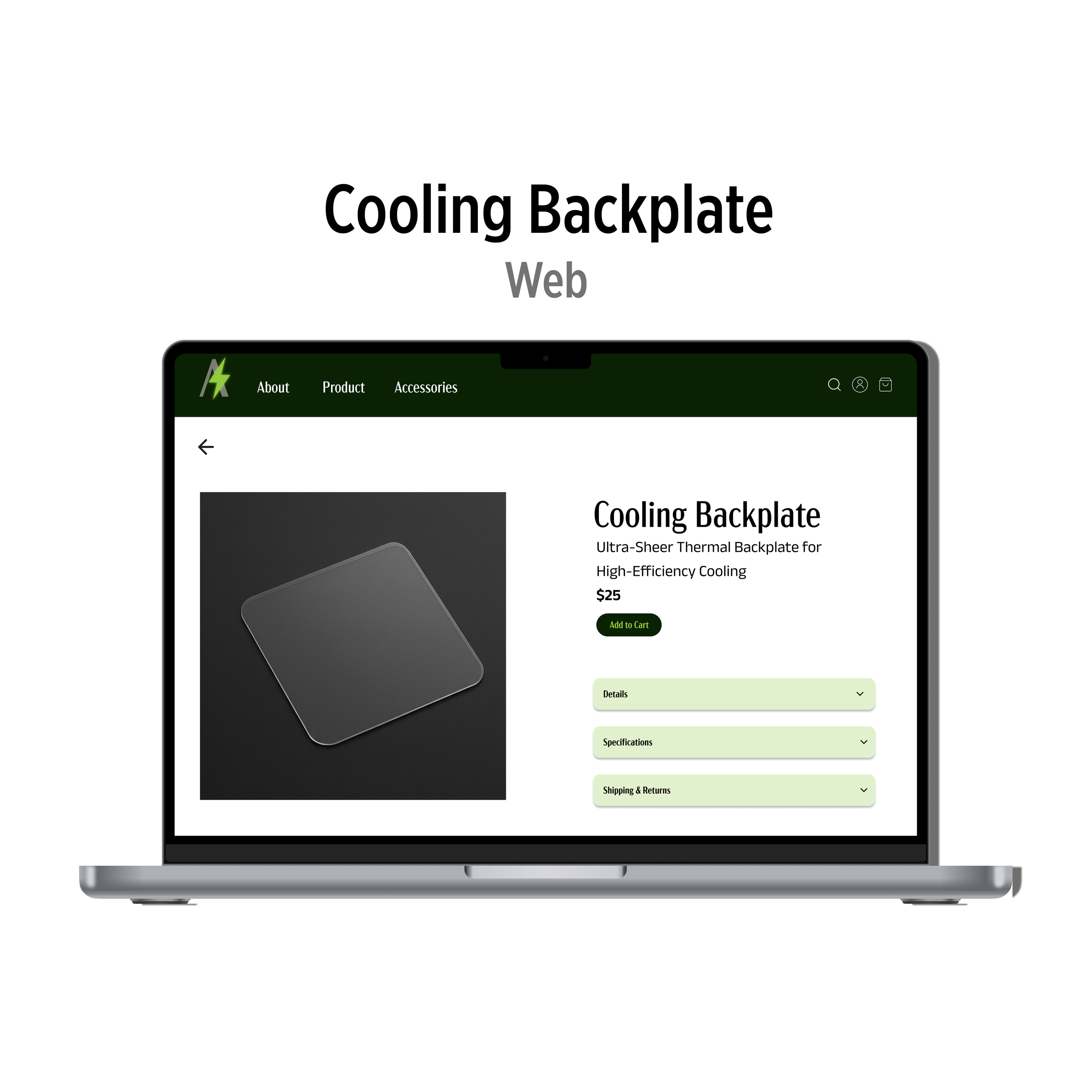
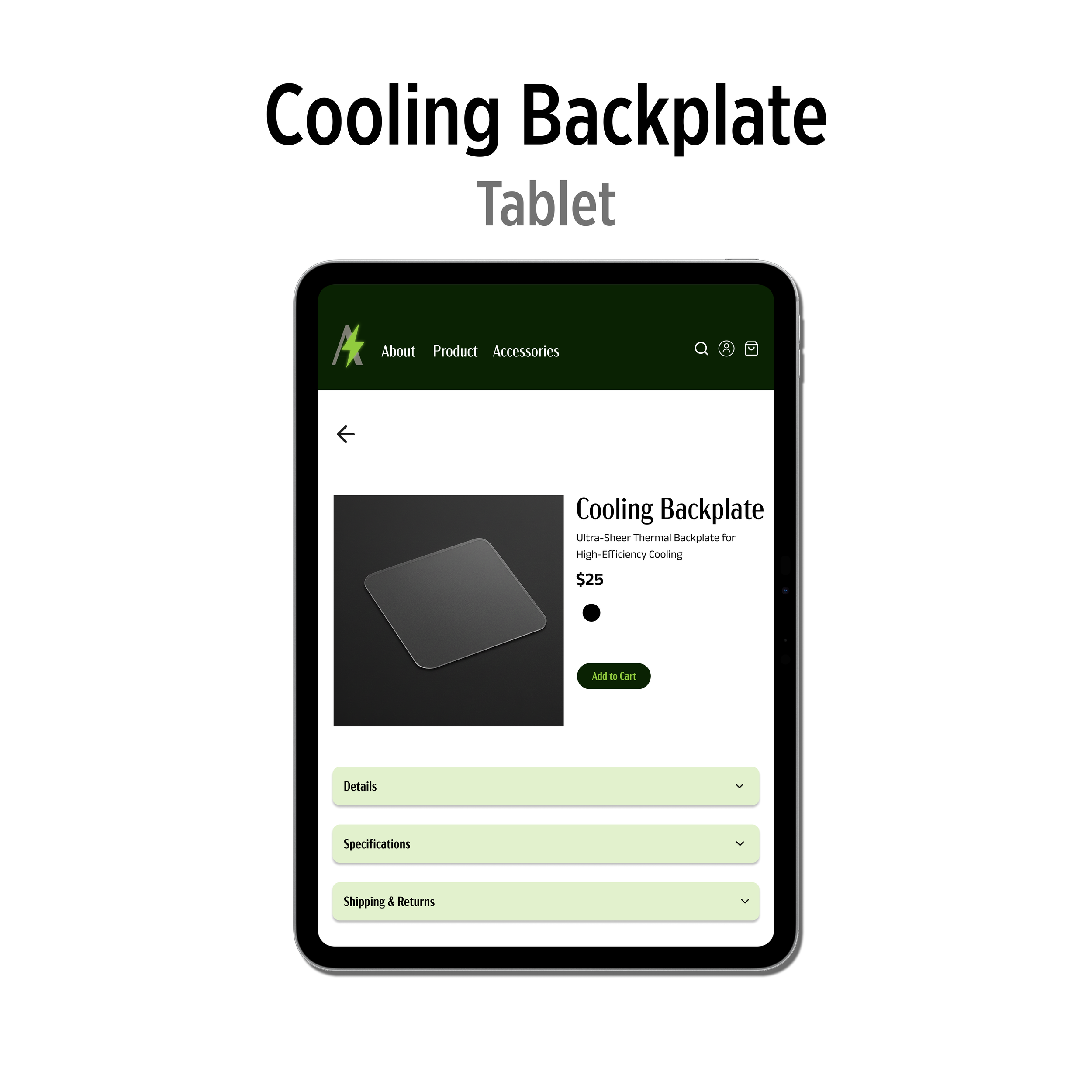
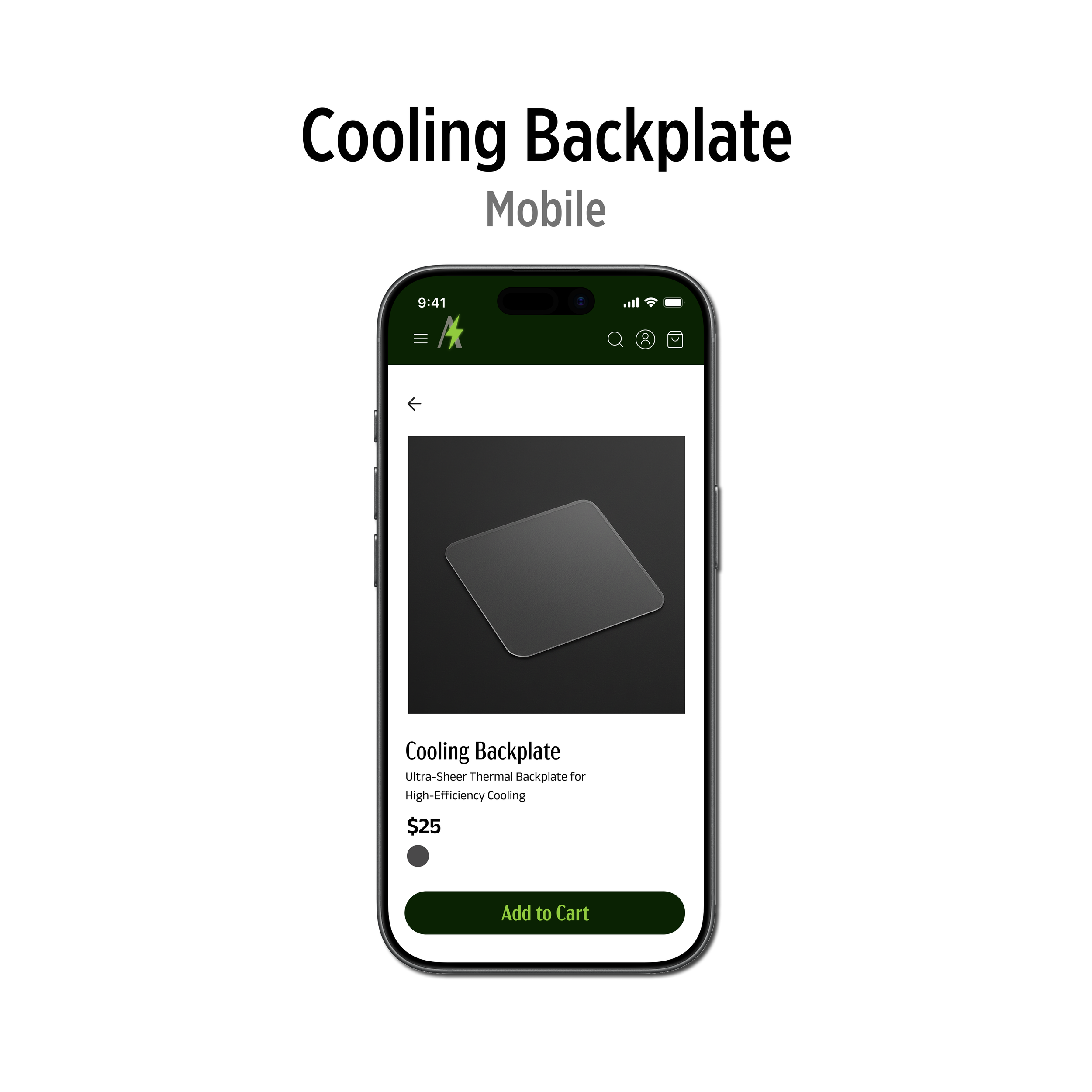
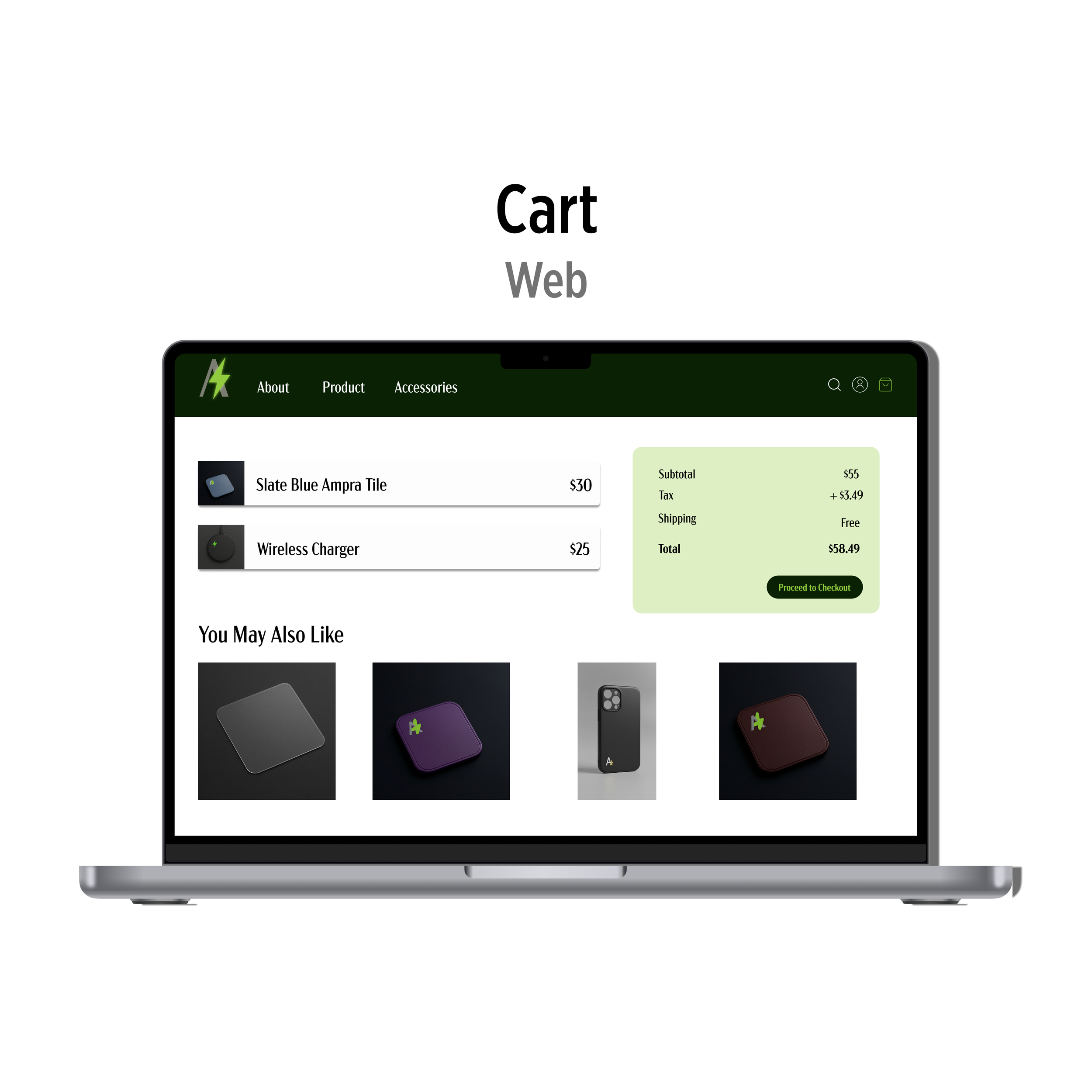
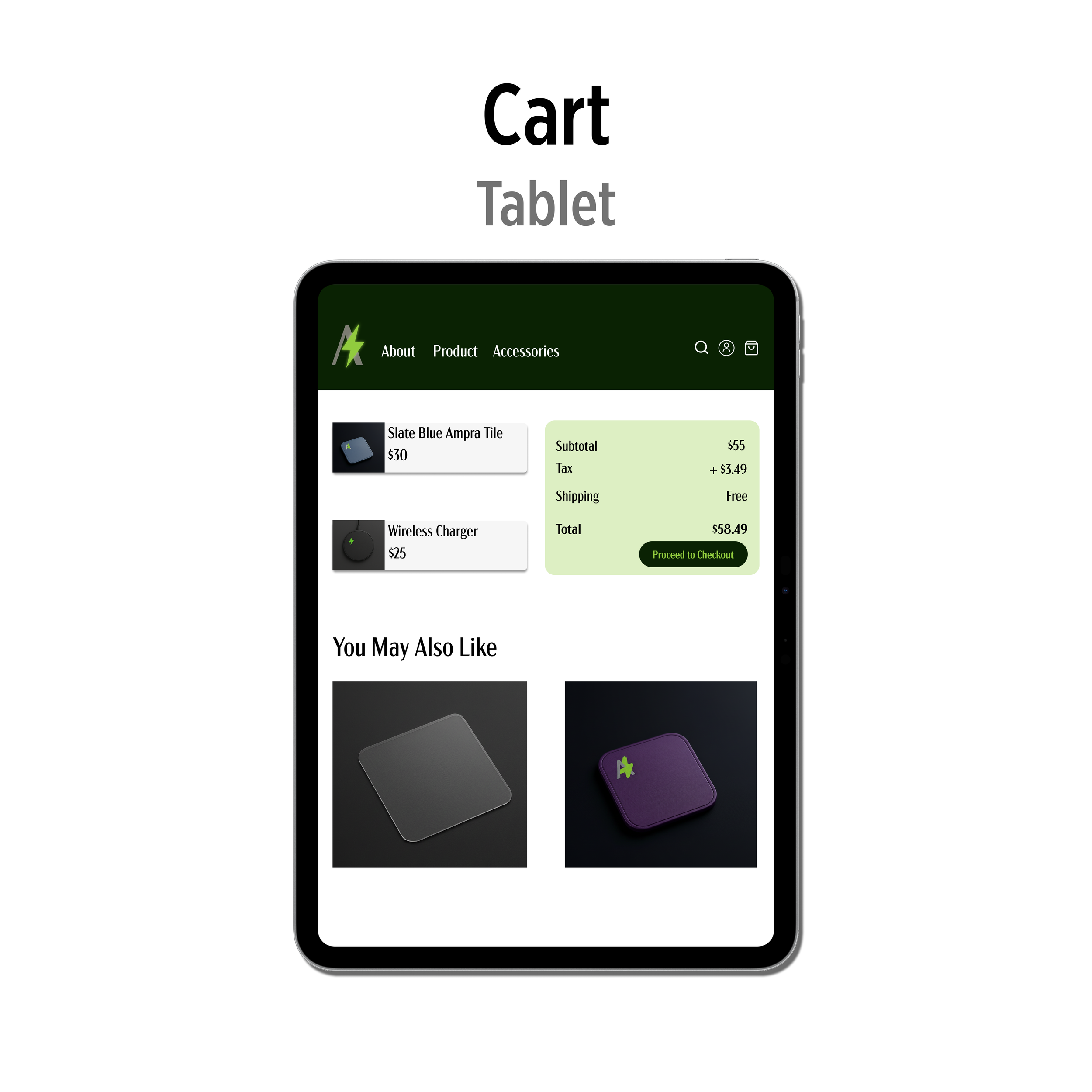
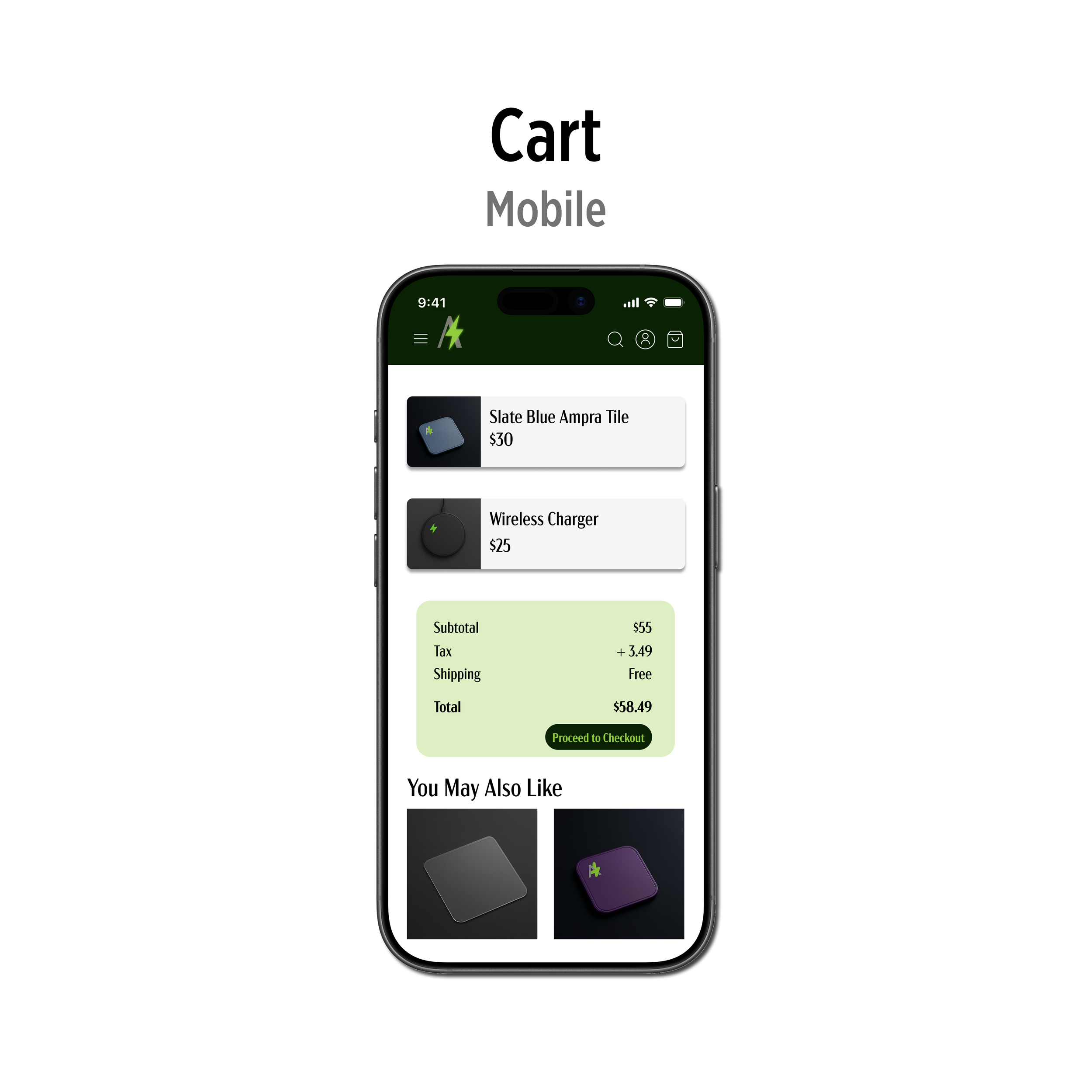
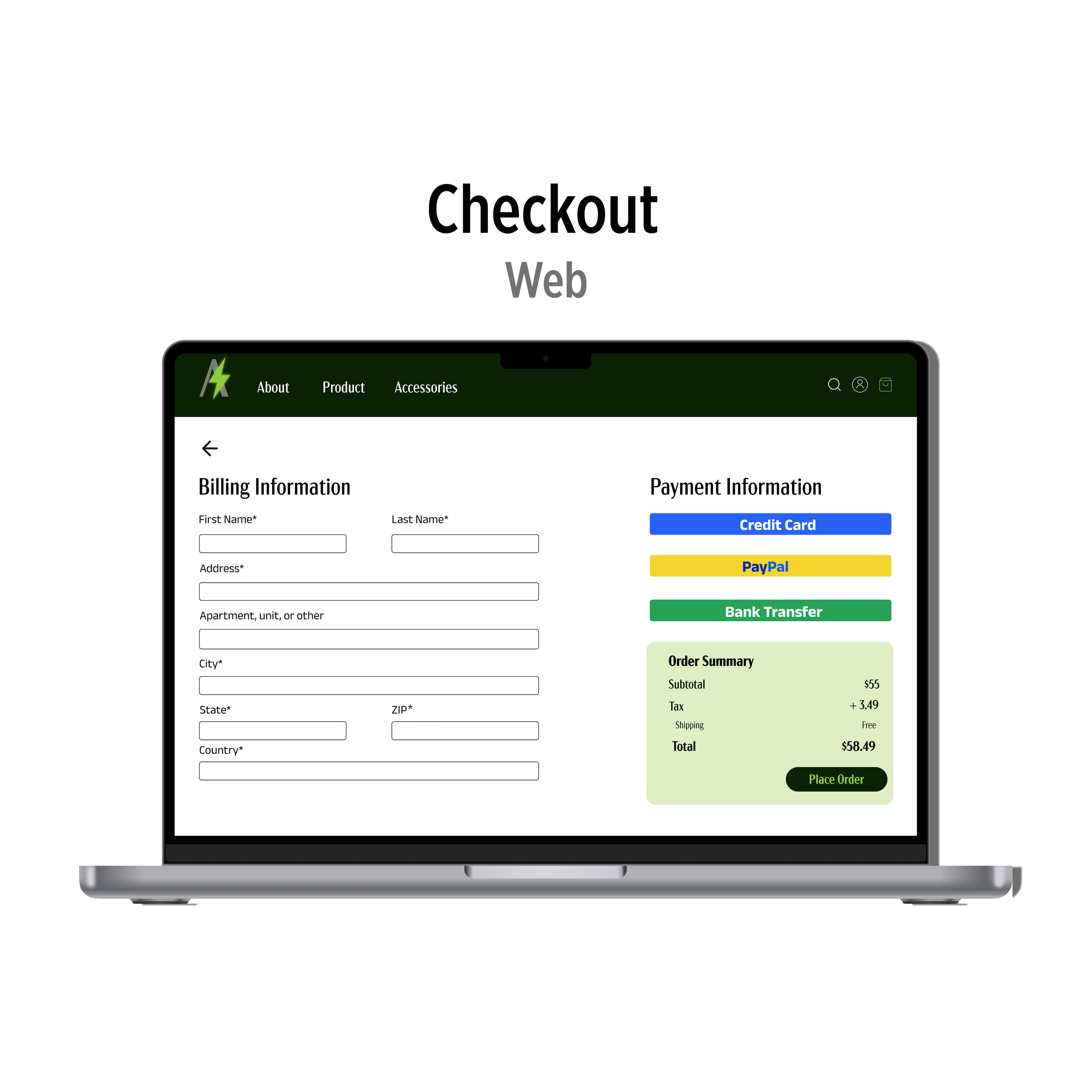
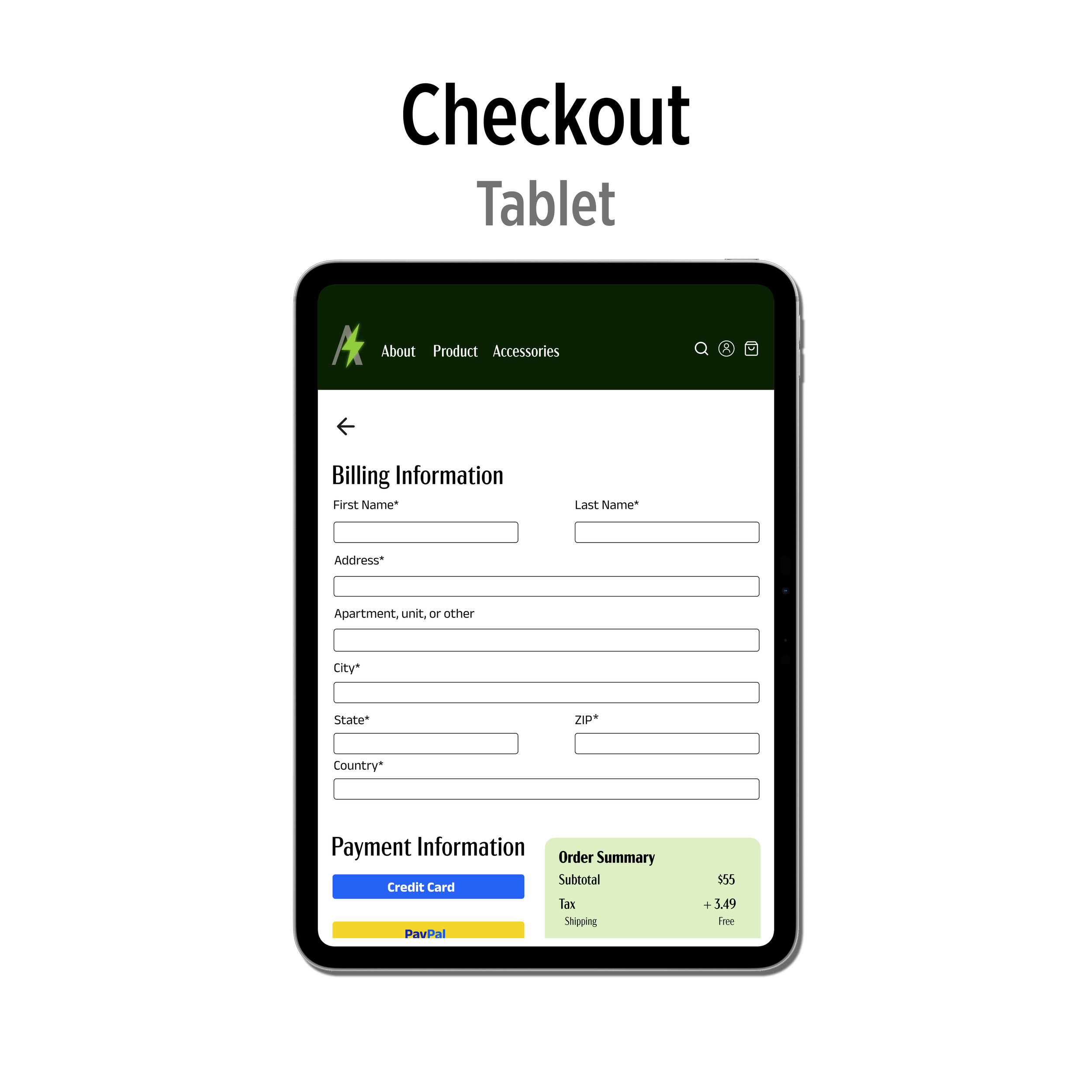
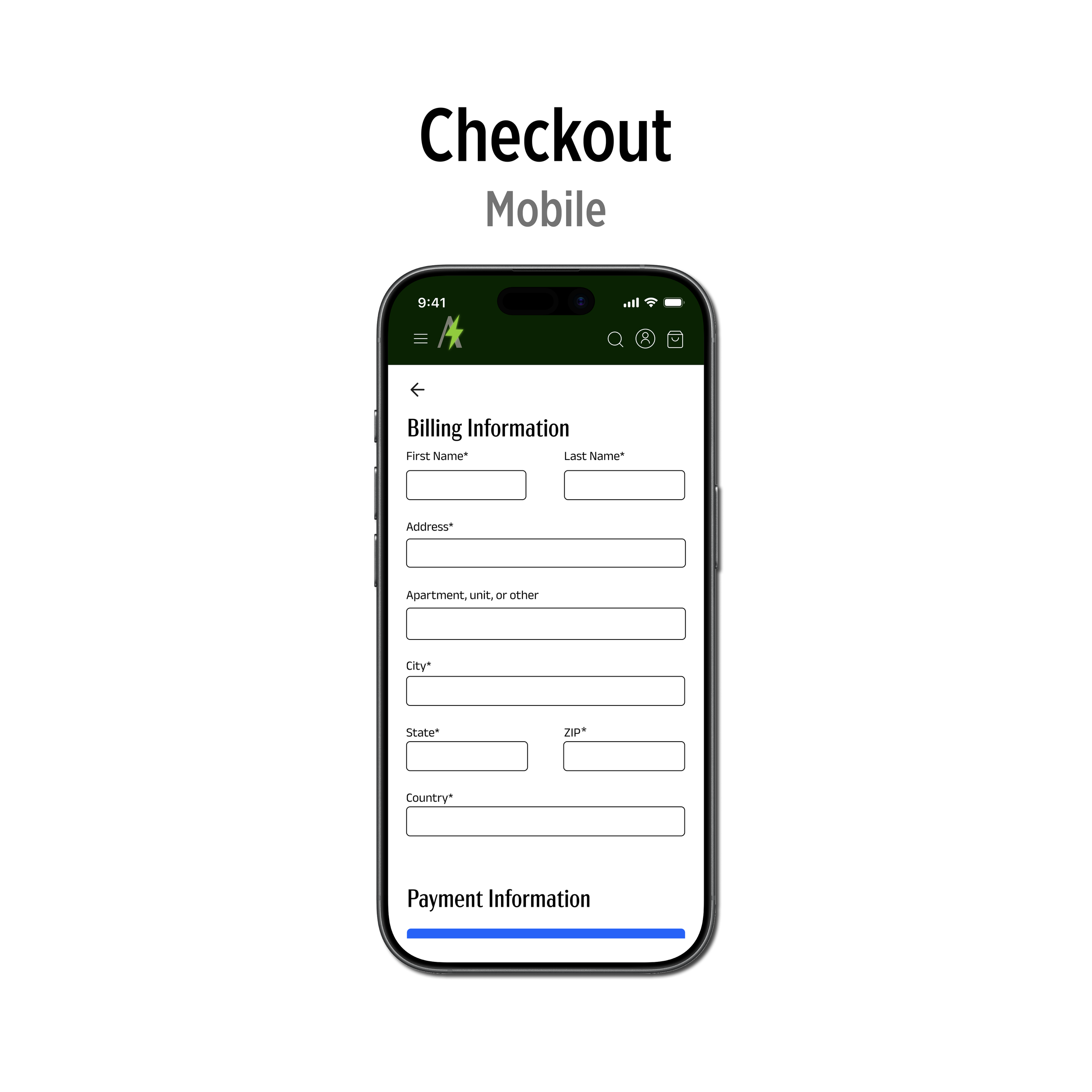
Using Figma, I developed interactive prototypes for the desktop, tablet, and mobile versions of the website. Each version was designed to maintain visual and functional consistency while adapting to the constraints and opportunities of different devices.
Throughout the prototyping process, I focused on creating clear navigation, strong visual hierarchy, and consistent branding. The prototypes demonstrate how users would move through the site, interact with content, and understand the product. This stage allowed me to refine the user experience and ensure that the design felt intuitive and cohesive.
Final Product
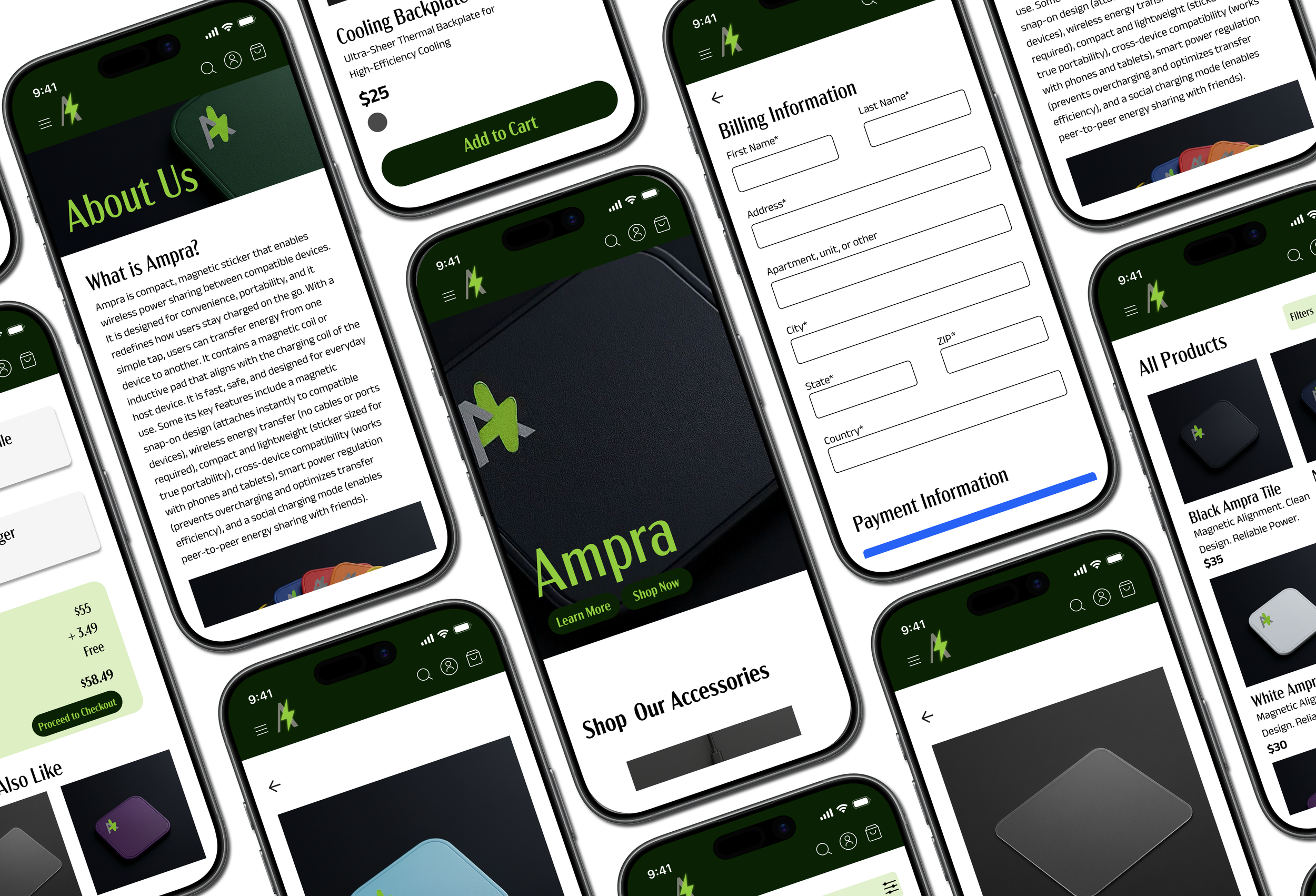
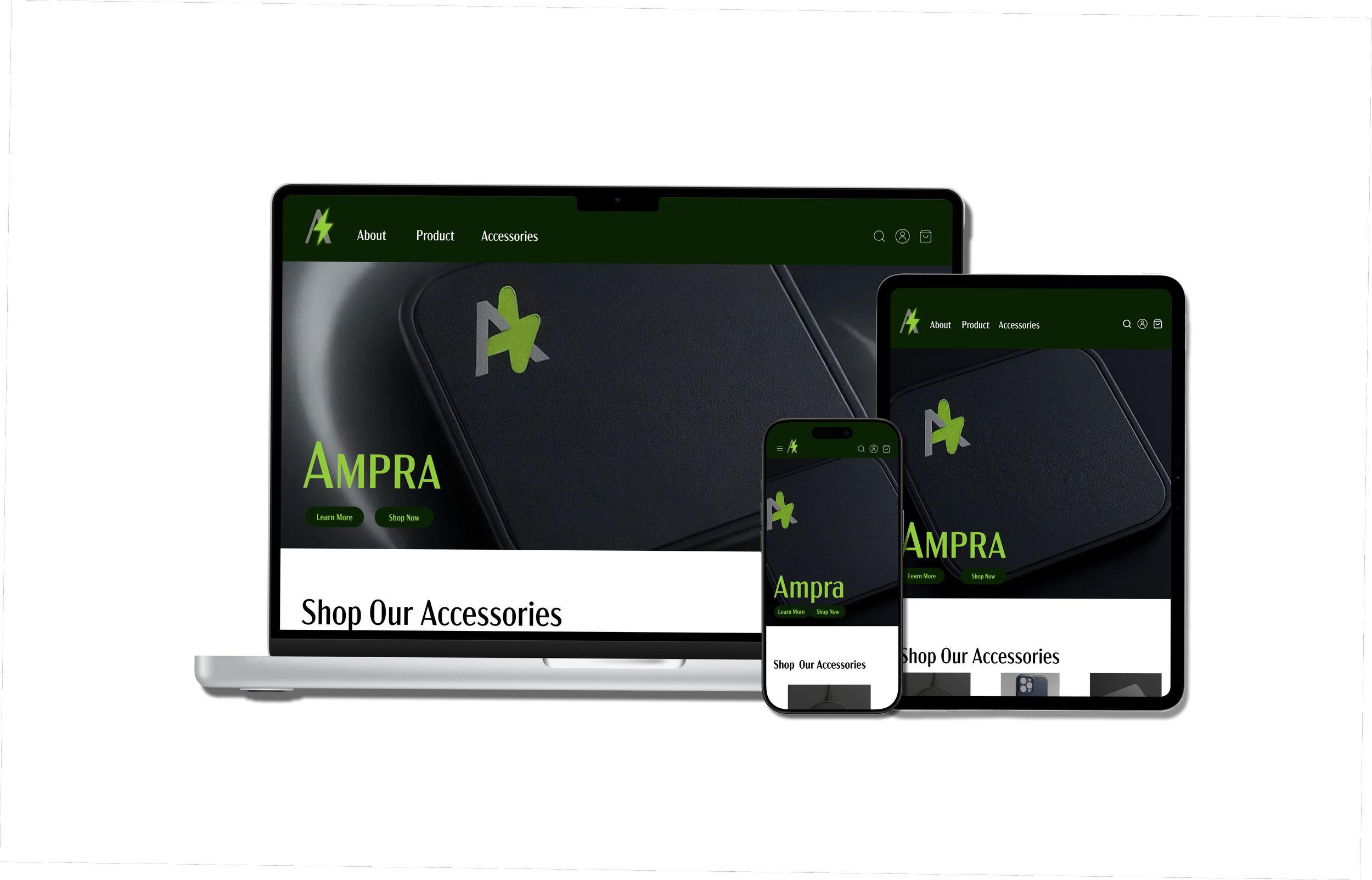
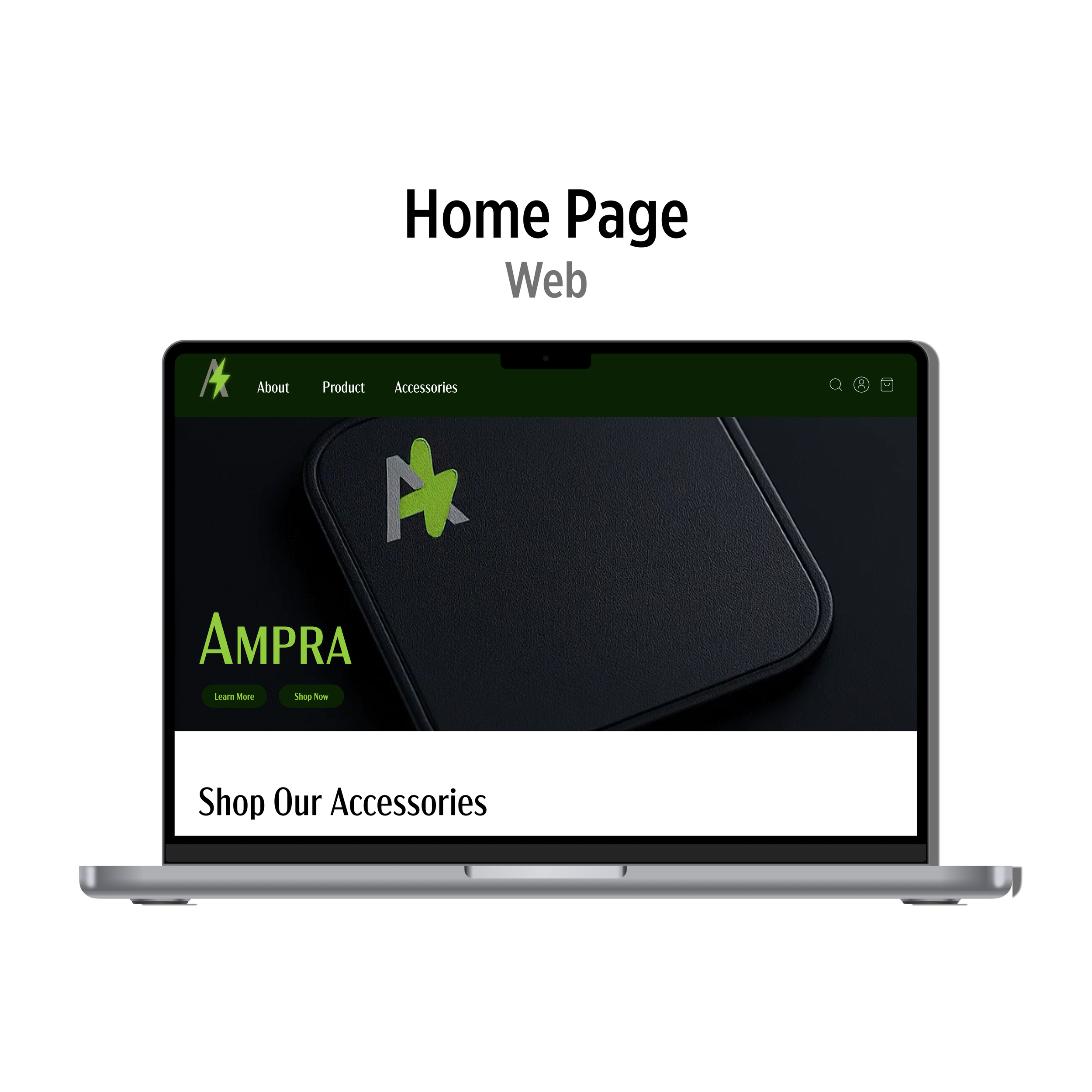
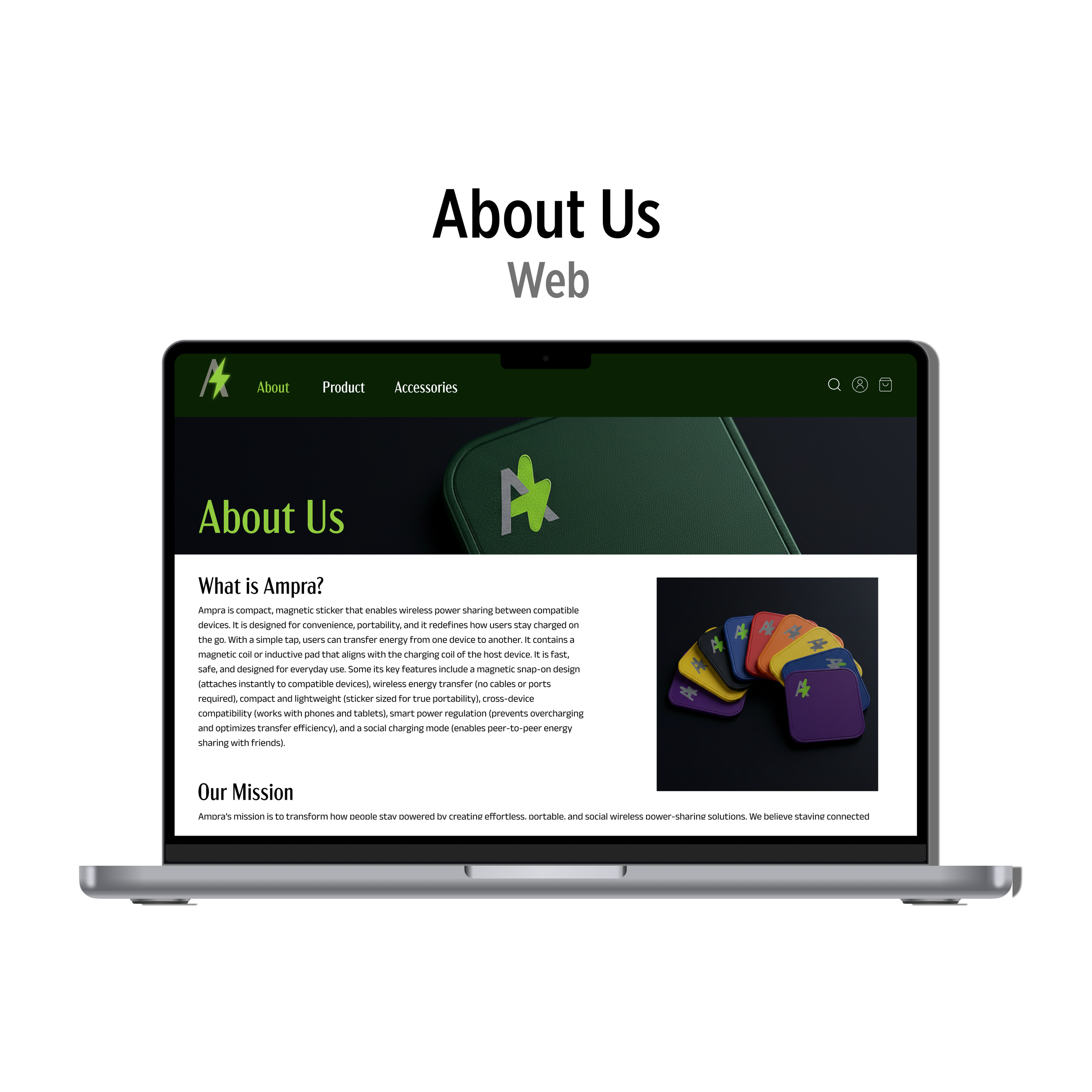
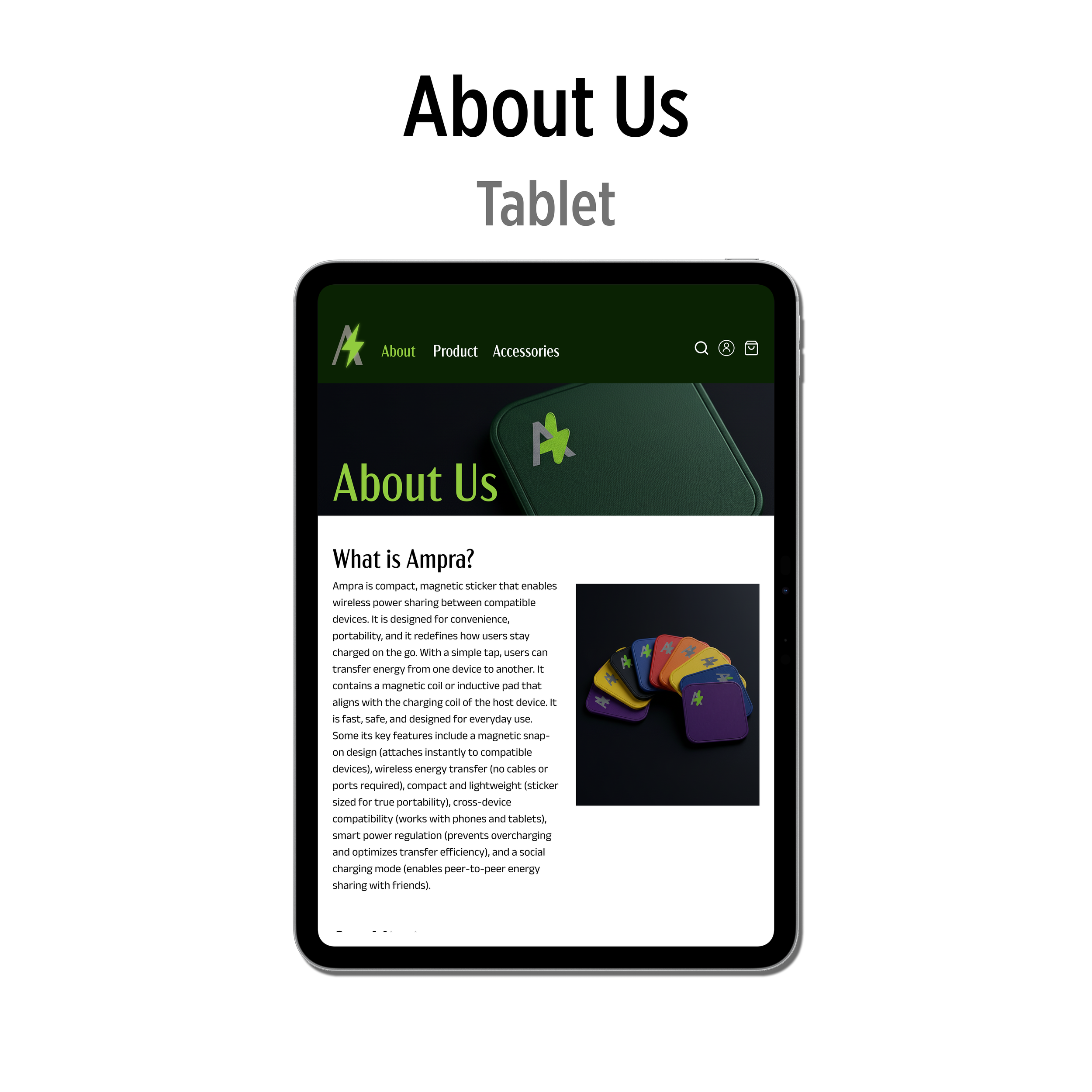
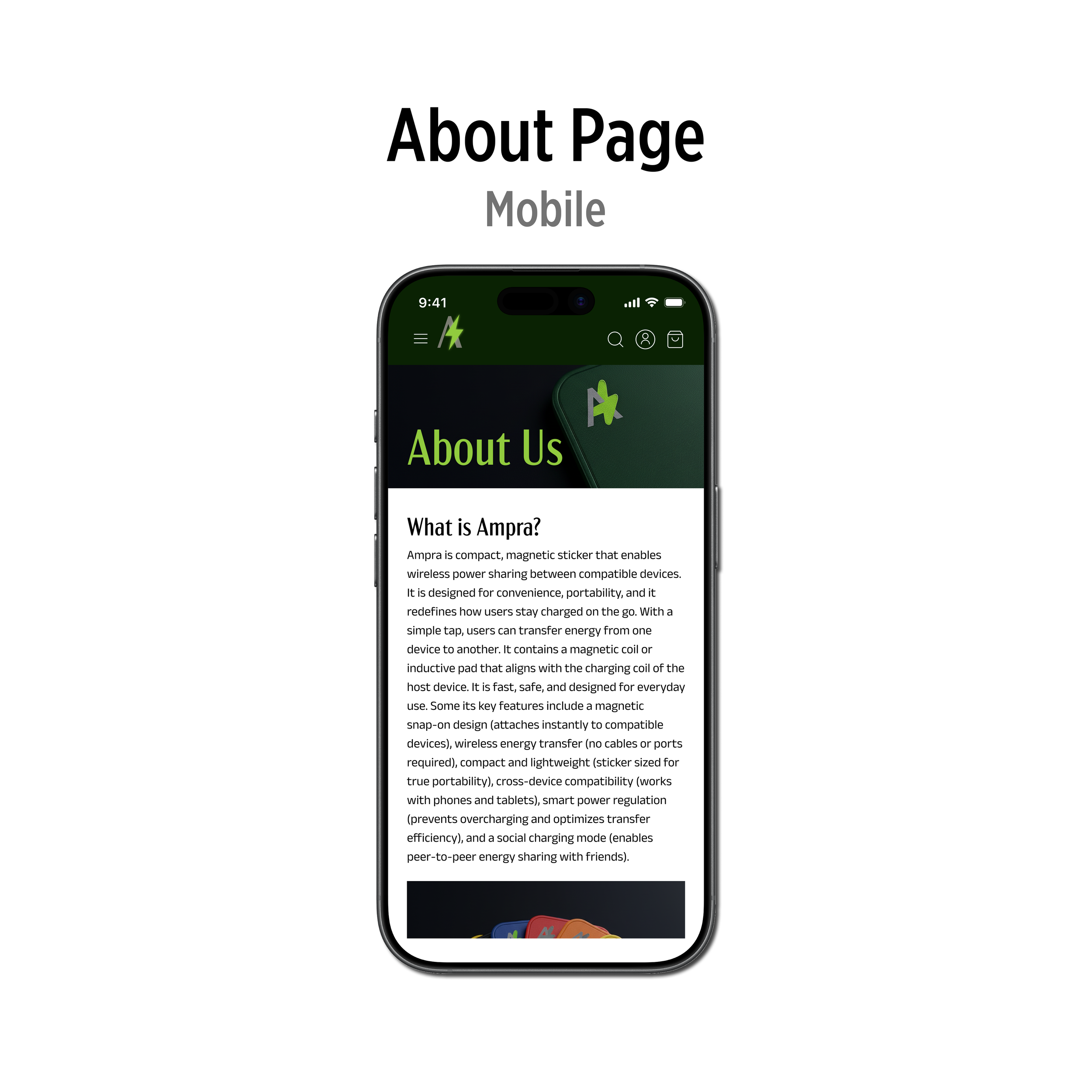
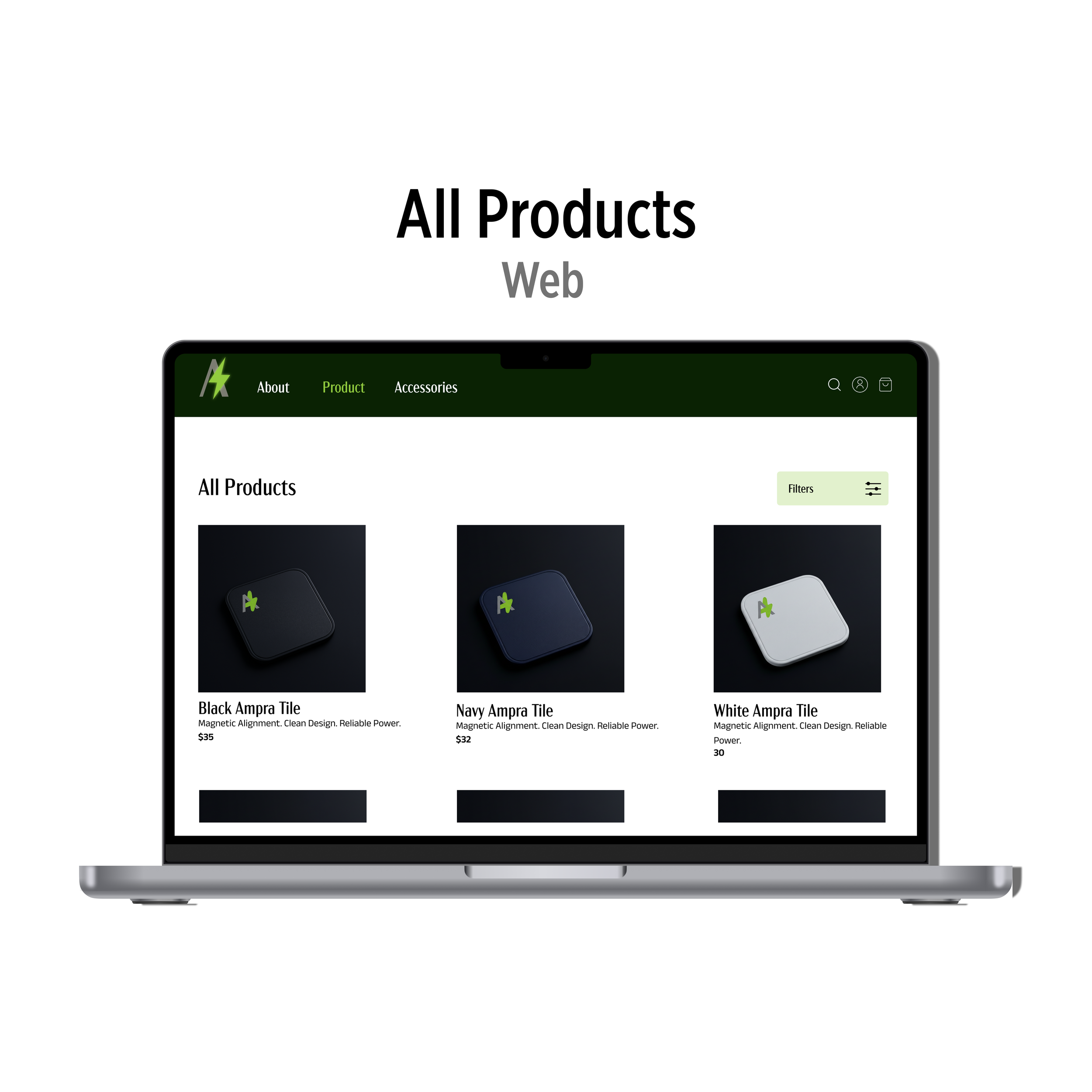
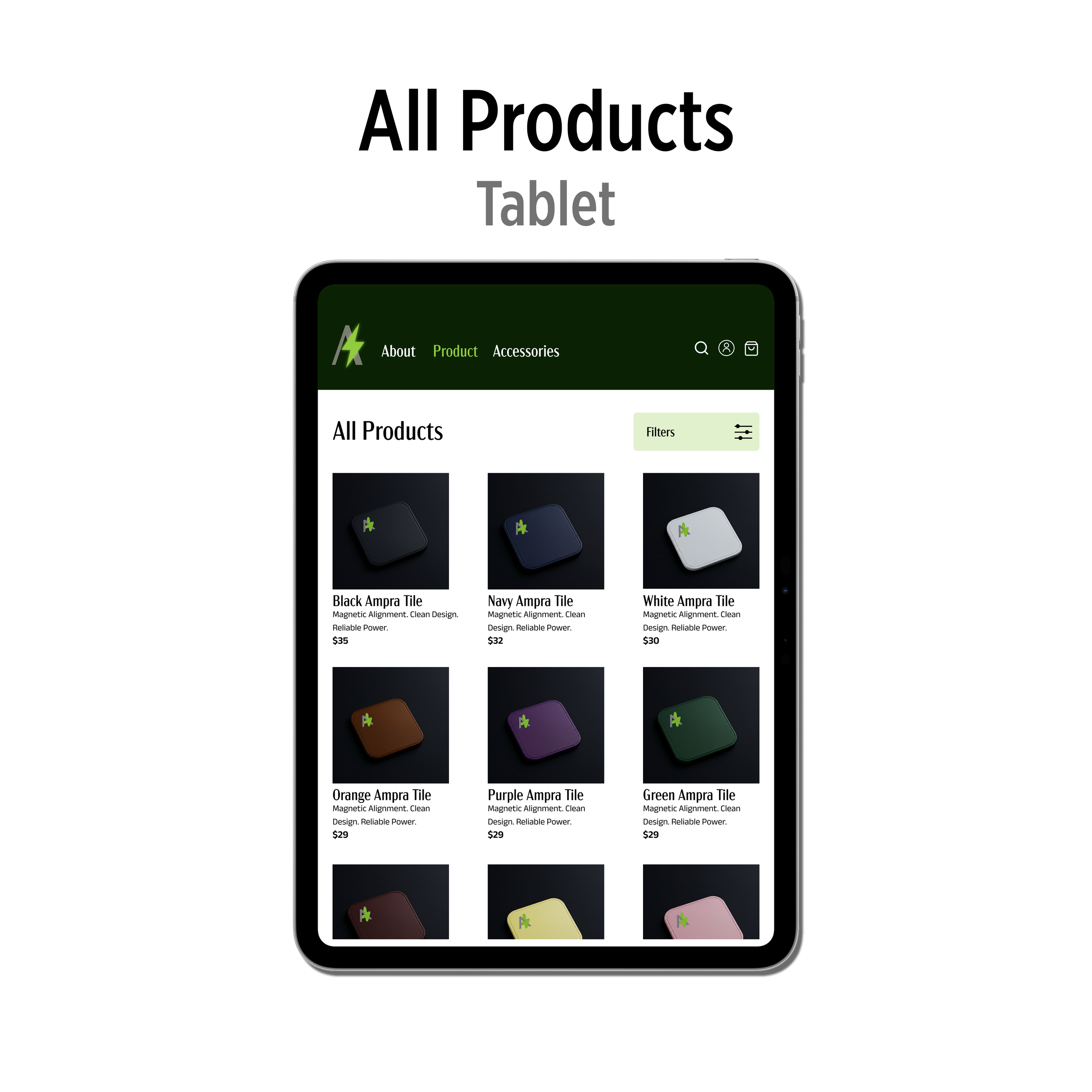
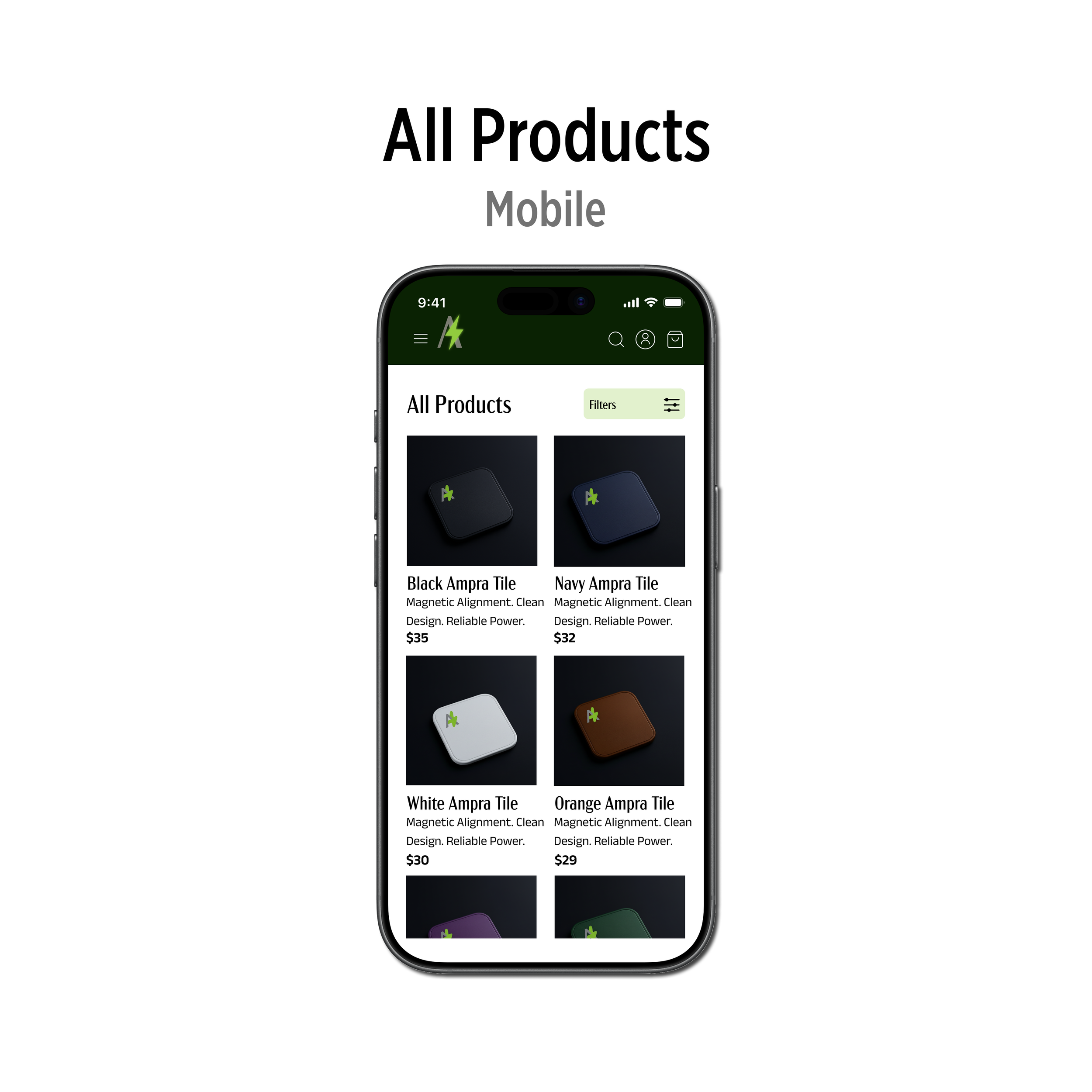
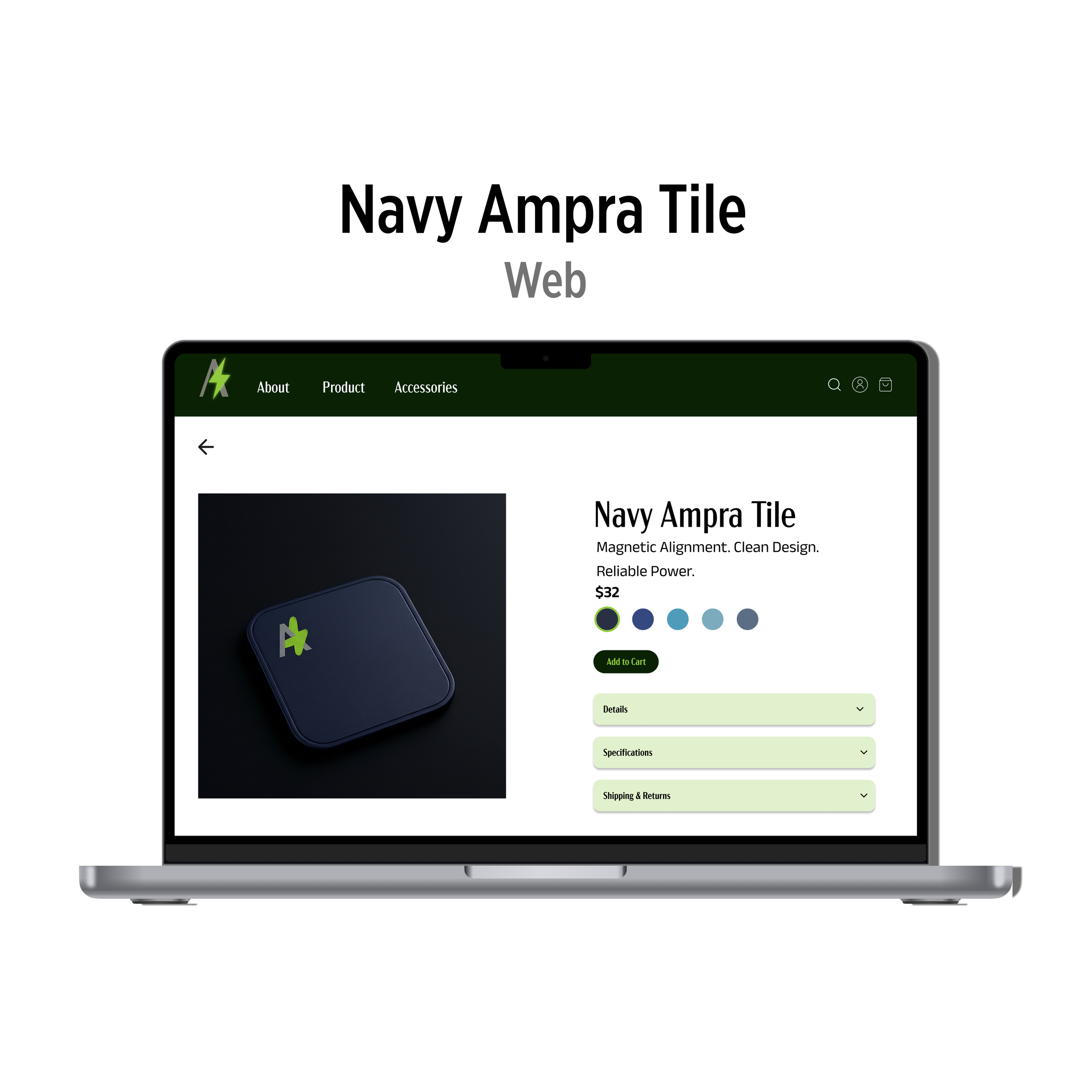
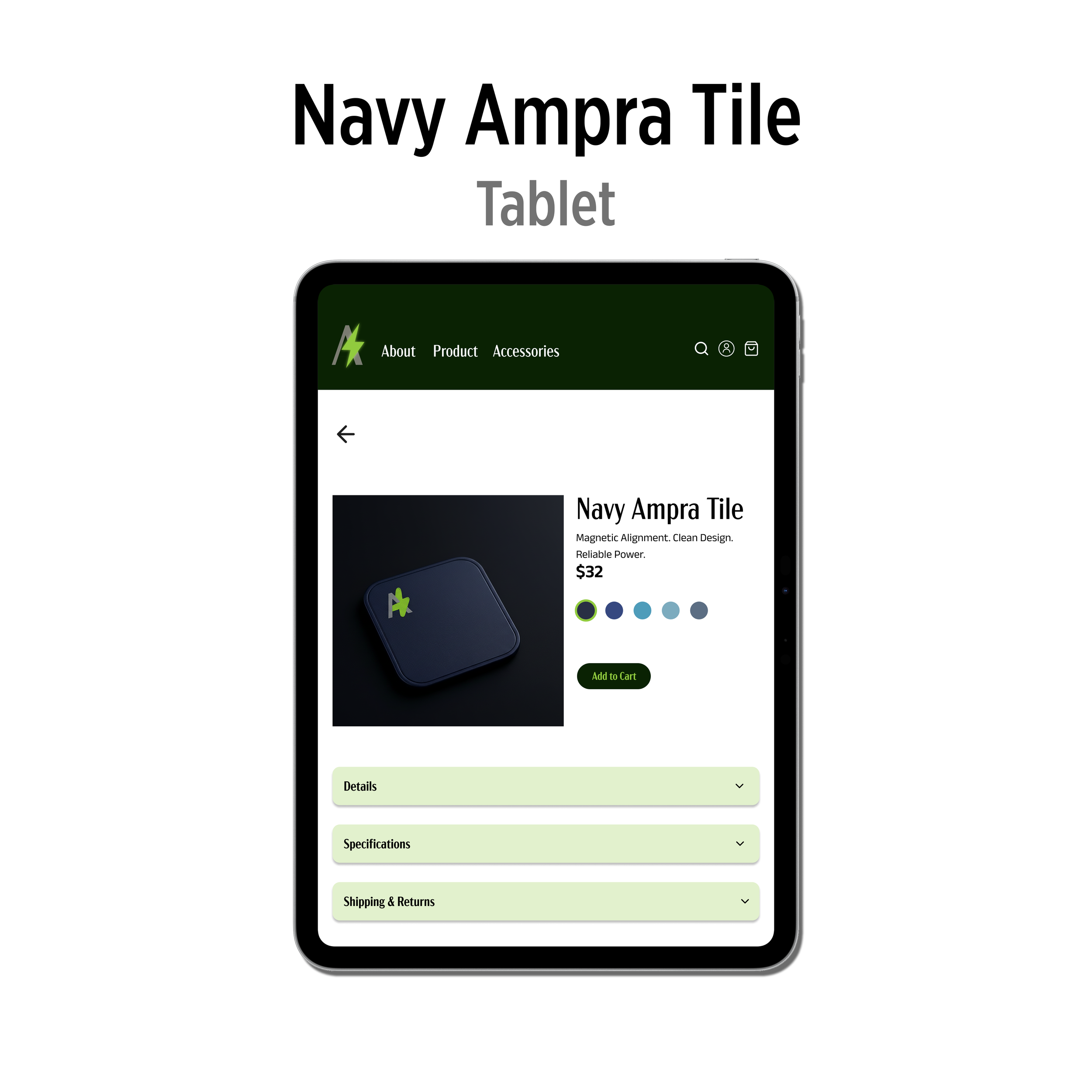
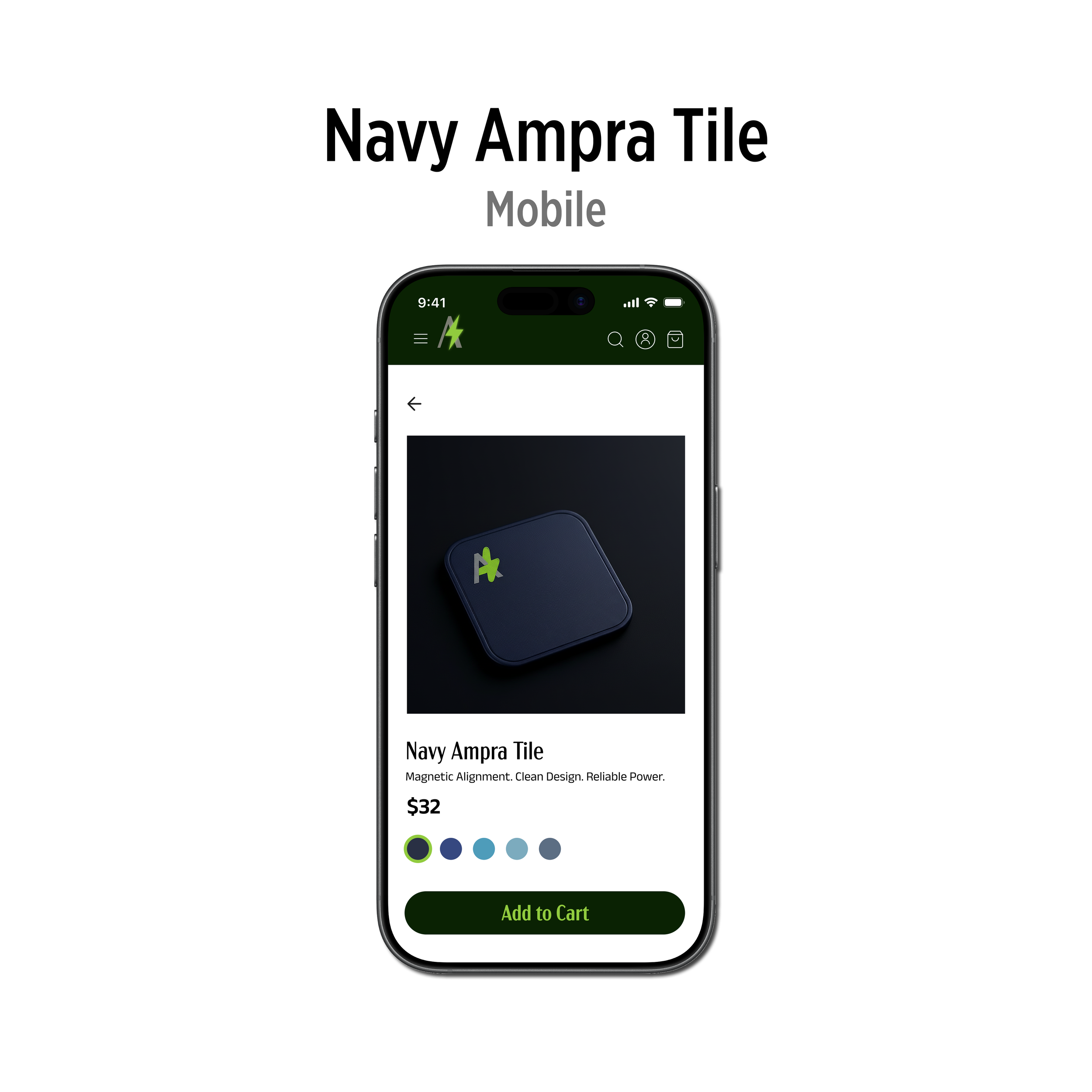
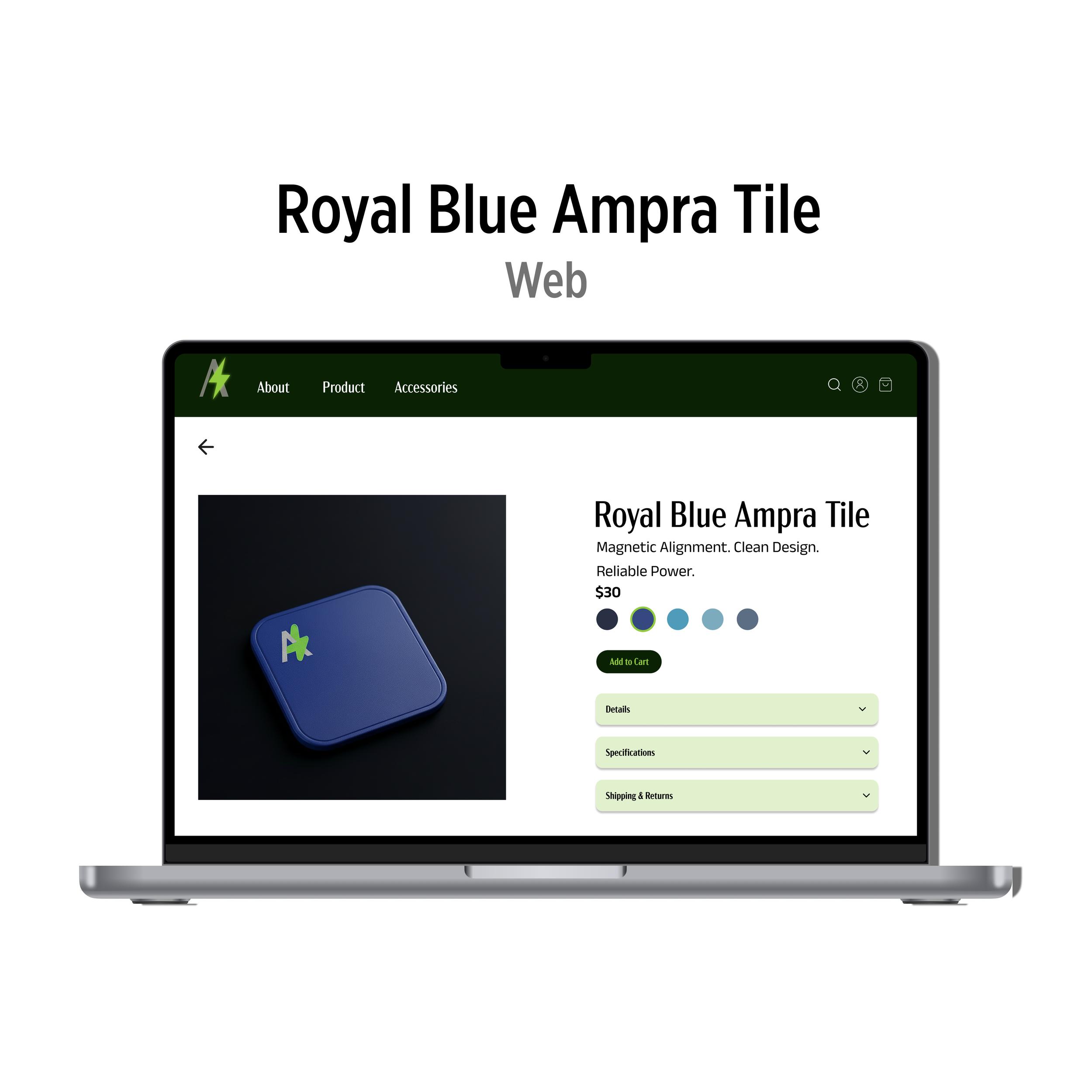
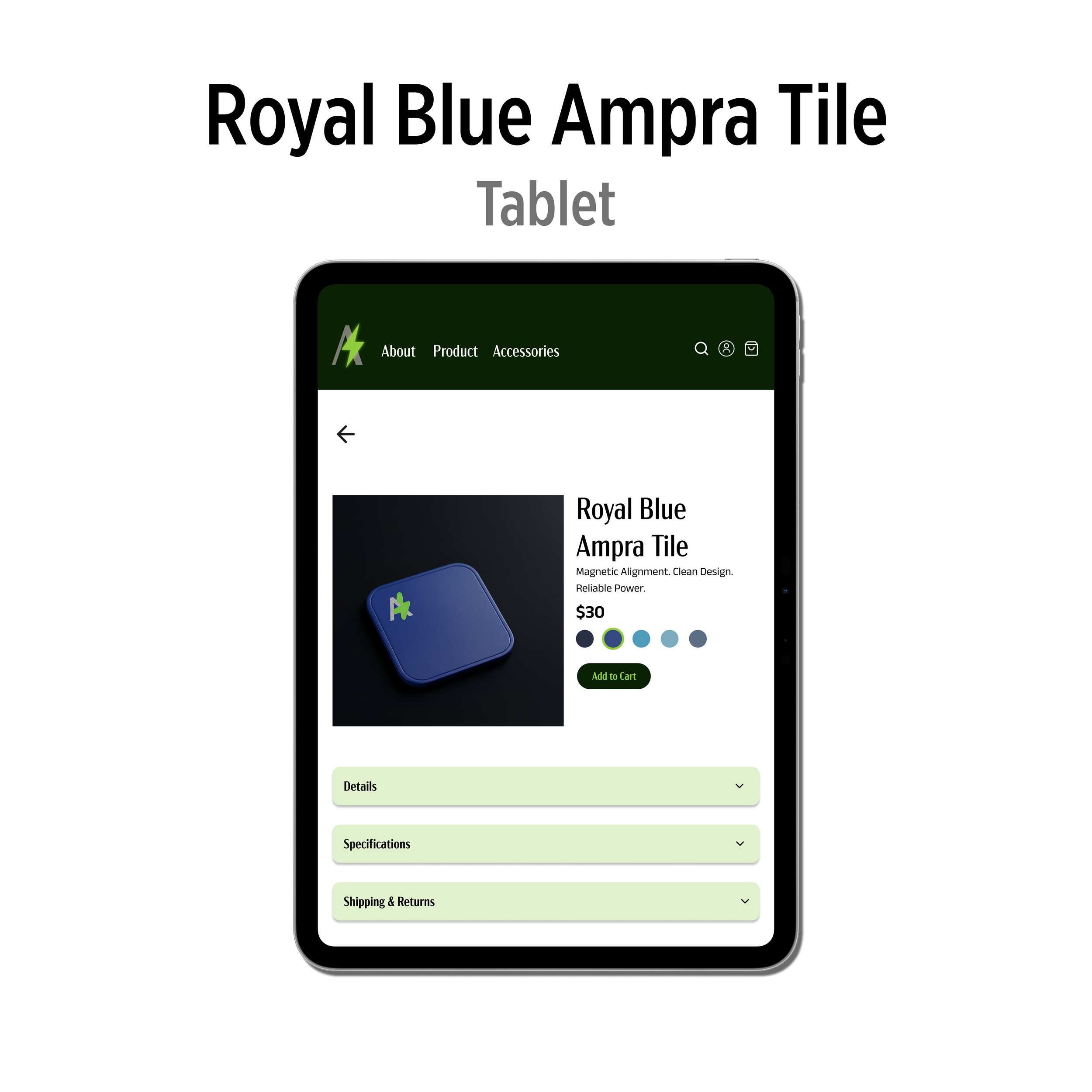
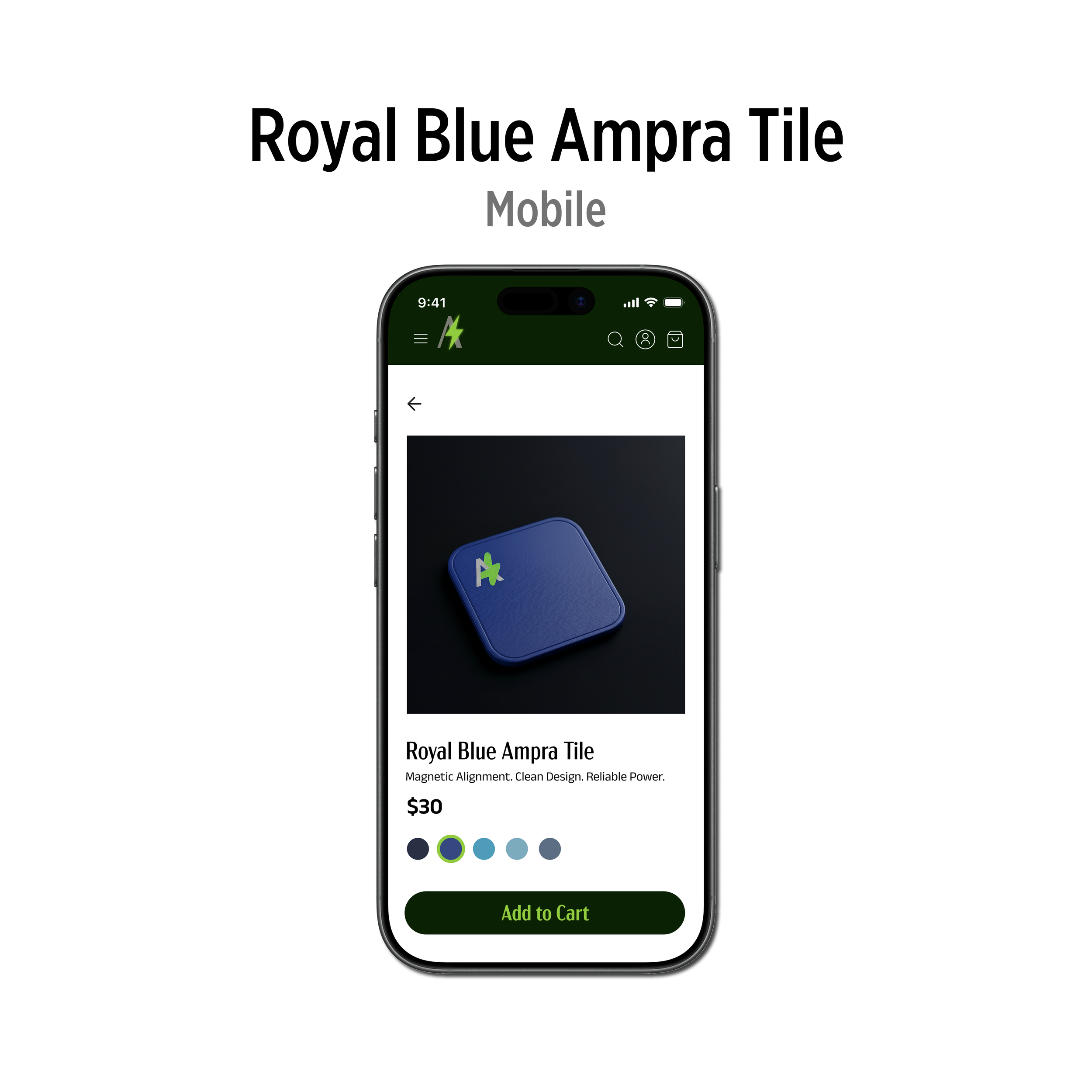
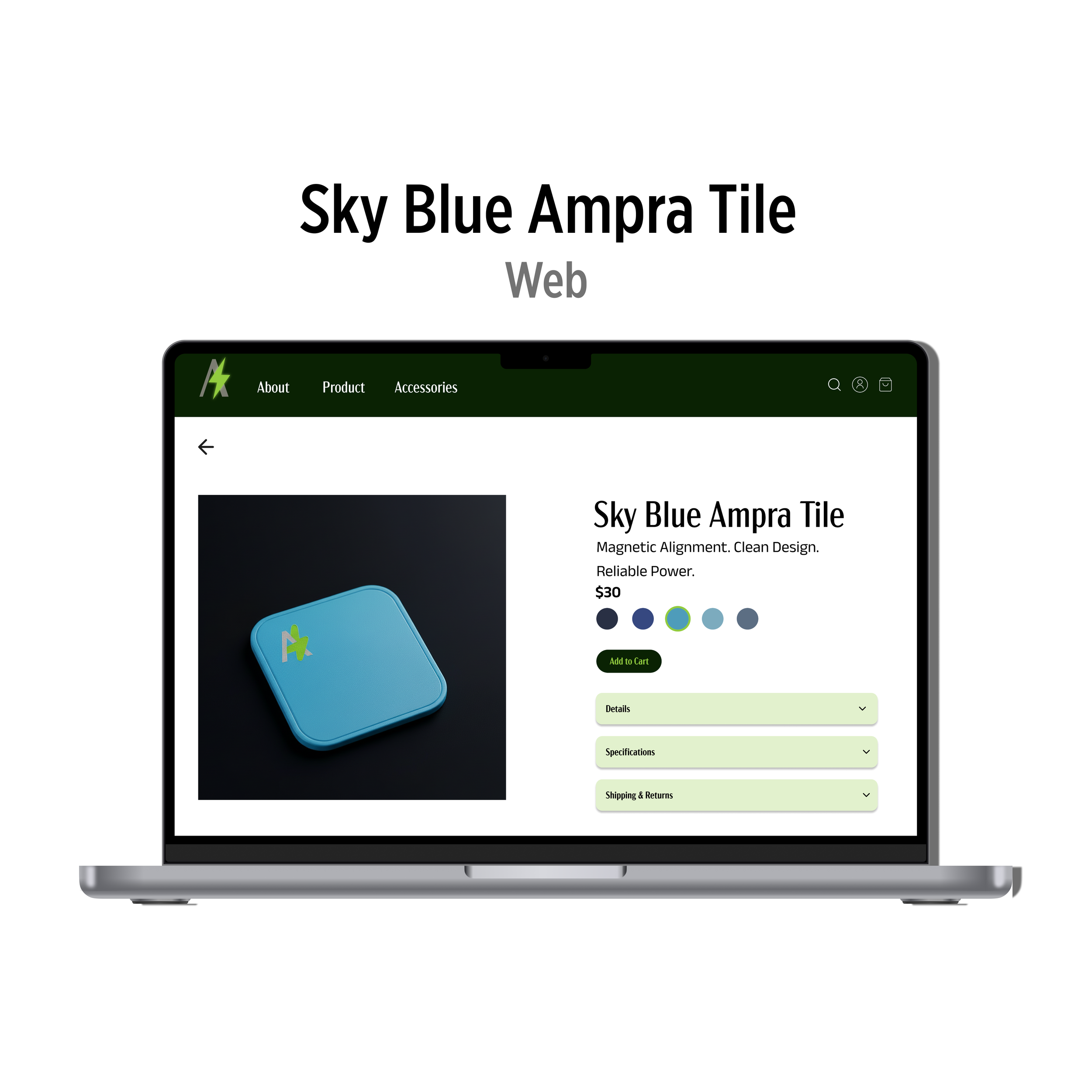
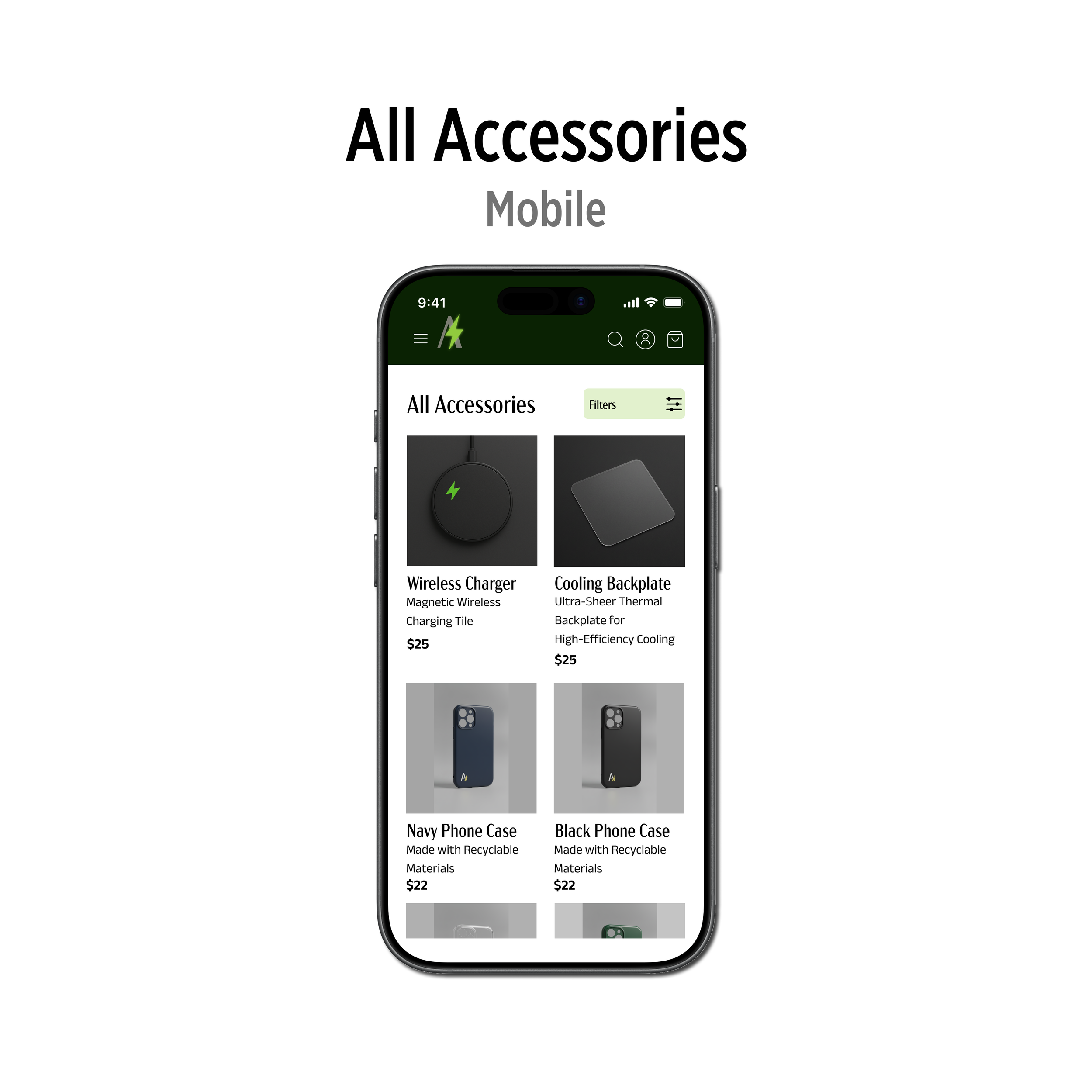
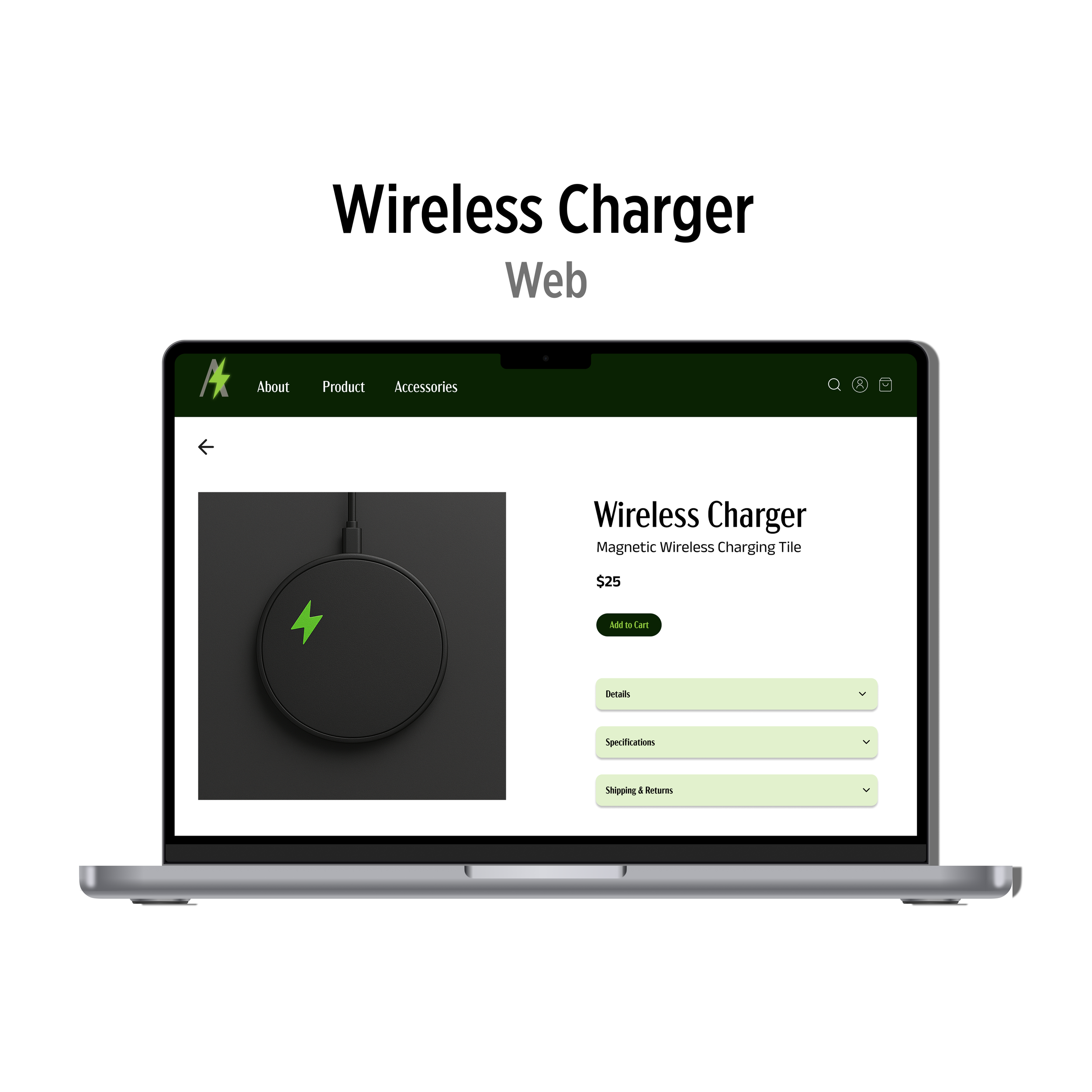
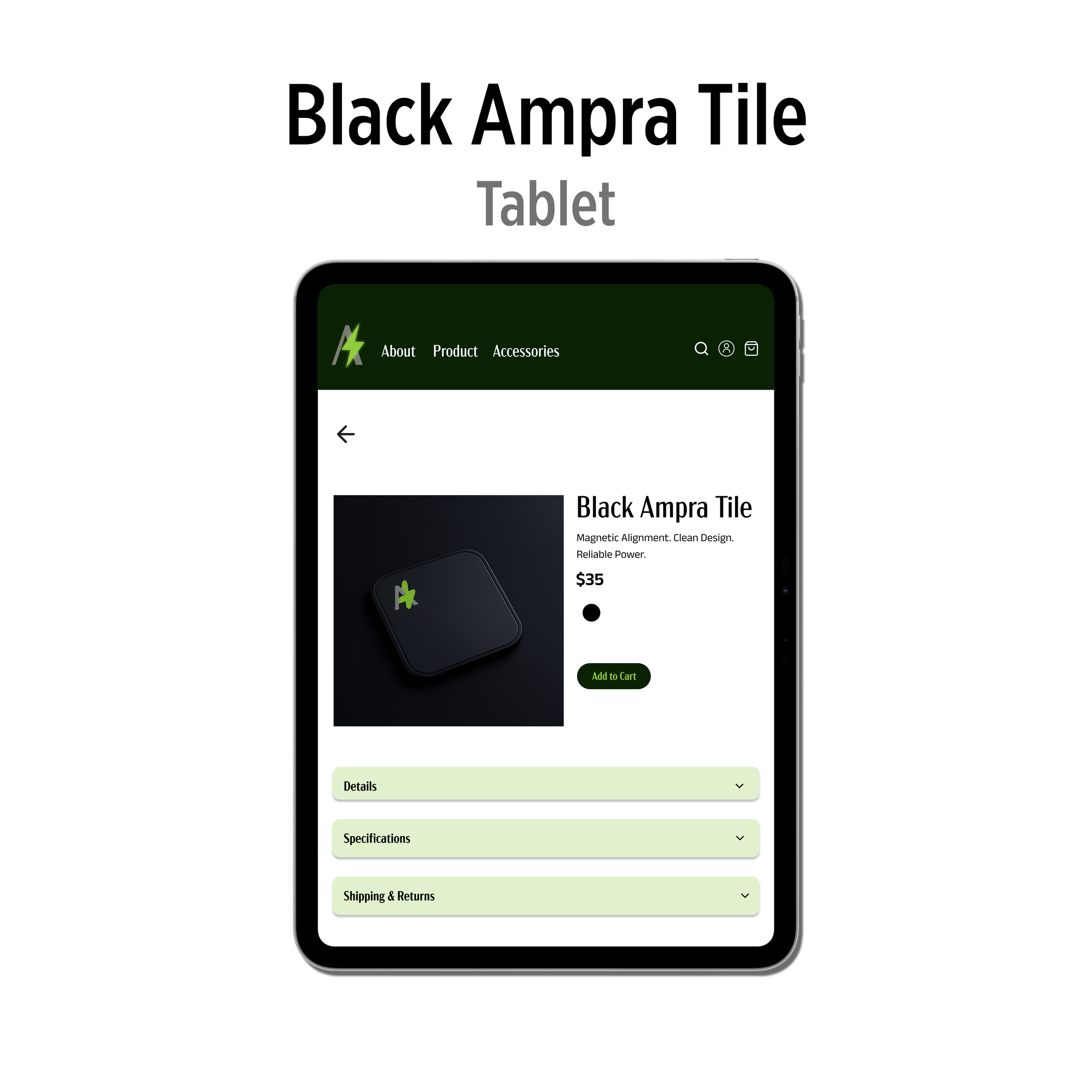
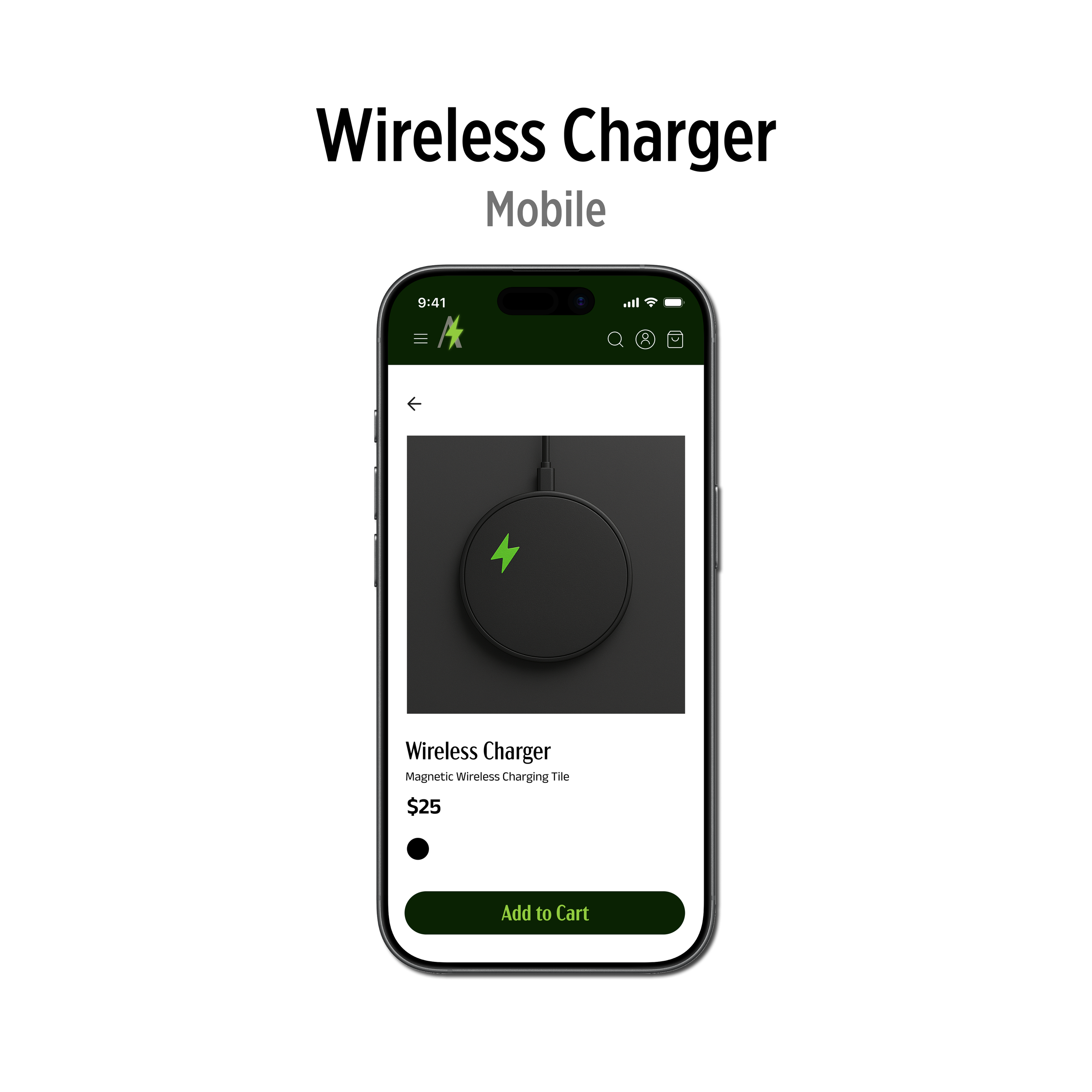
The final design presents Ampra as a sleek and innovative solution for wireless power sharing. The website clearly communicates the product’s function through a combination of strong visuals, concise messaging, and a well-structured layout. The branding and interface work together to create a cohesive experience that reflects the product’s emphasis on convenience and modern technology.
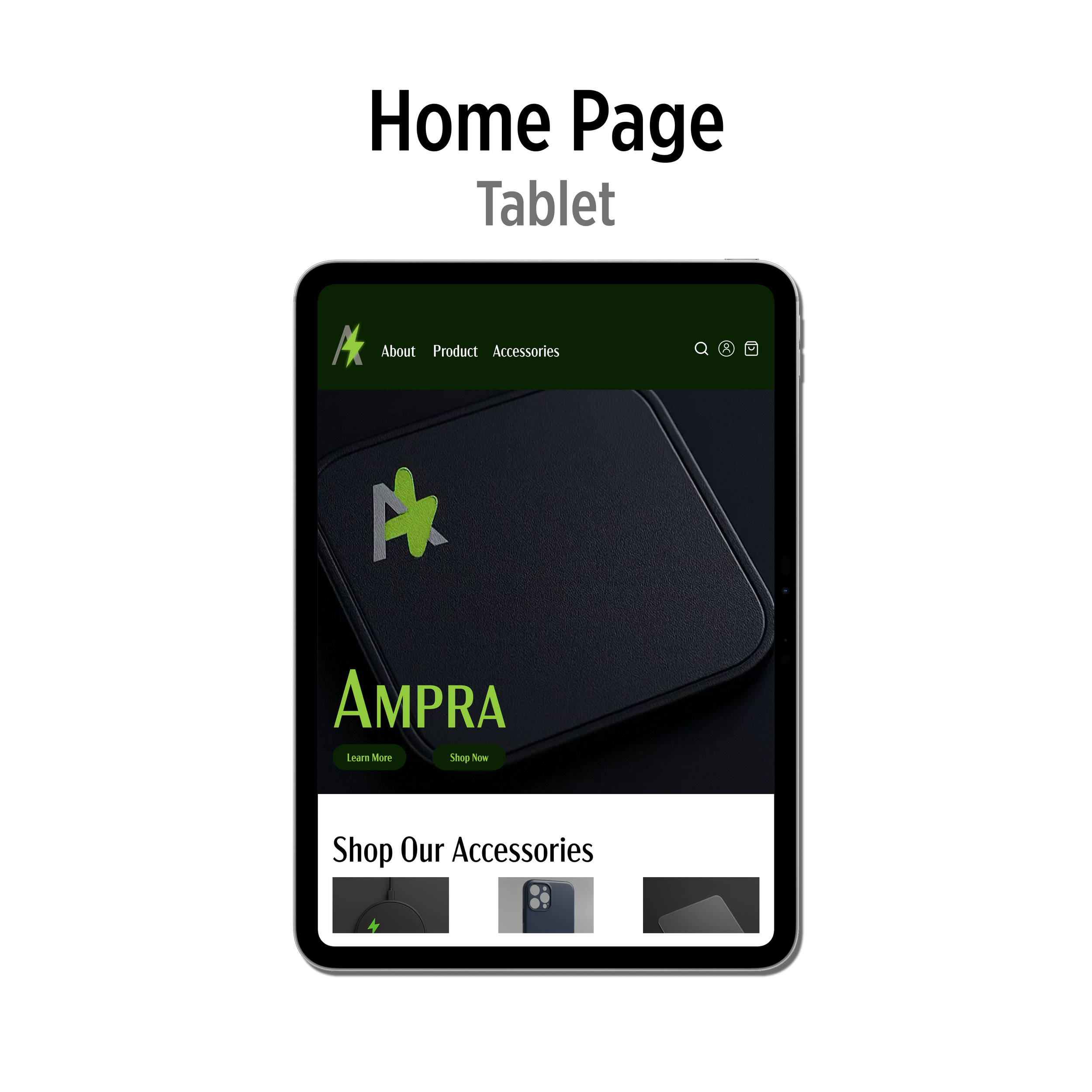
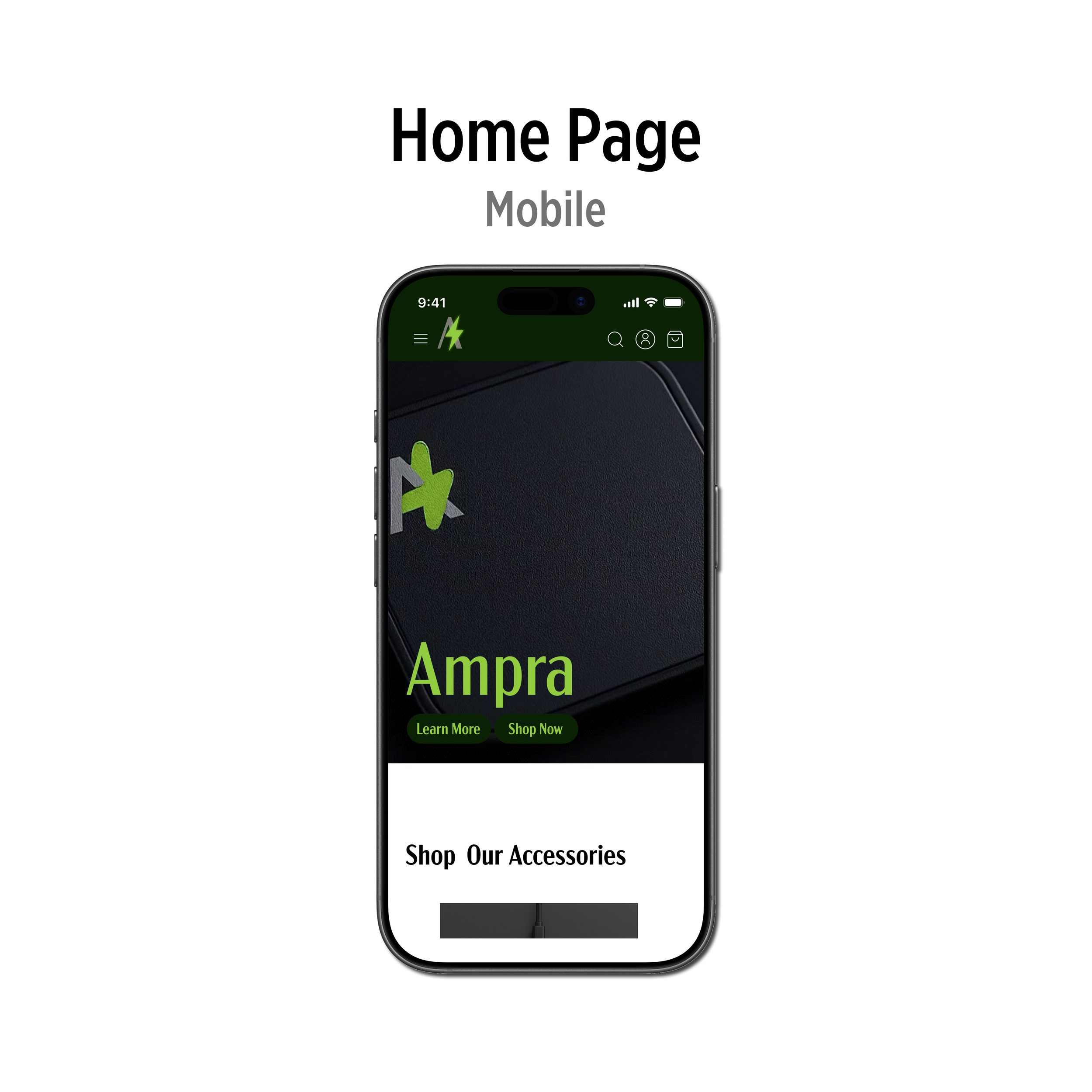
The responsive designs ensure that the user experience remains consistent across desktop, tablet, and mobile platforms. Each version maintains the same visual identity and clarity while adapting to different screen sizes, reinforcing the accessibility and usability of the product.
Outcome
This project strengthened my ability to work across multiple areas of design, combining product development, branding, and UX/UI into one cohesive system. It reinforced the importance of research-driven design and demonstrated how thoughtful planning can lead to more effective and meaningful outcomes.
Through this process, I developed a deeper understanding of responsive design and how to adapt layouts without losing clarity or consistency. Additionally, the project challenged me to think beyond aesthetics and focus on how design can communicate functionality and improve everyday user experiences.
Overall, this project reflects my ability to approach design strategically, create cohesive visual systems, and develop solutions that are both functional and visually refined.